
About Us
Our Mission
Plan Bees is a community service dedicated to preserving and supporting local bee populations in Lane County, Oregon. We believe that protecting pollinators requires both immediate action—like rescuing swarms and relocating nests—and long-term thinking about habitat, education, and coexistence.
About Me
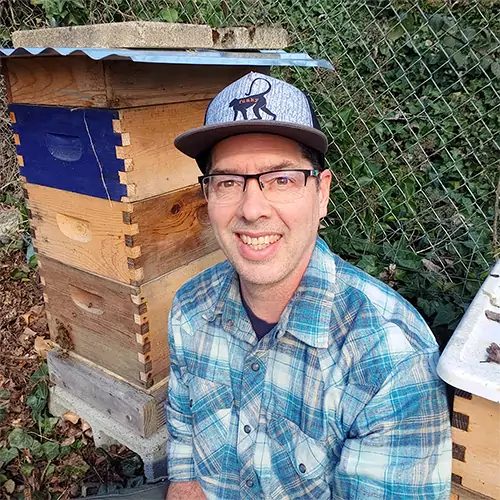
I’m Brent Hefley, and I started Plan Bees in 2012 after getting interested in beekeeping and realizing how hard it was to find good local help for a honey bee swarm. At that time, online searches came back with a list of exterminators, and that definitely wasn't right. I created Plan Bees to give people another option.
Over the years, it’s grown into a mix of rescue, education, and a whole lot of conversations about bees. One of the things I’ve especially enjoyed is helping new beekeepers get started. There’s a lot to learn in the beginning, and it can be surprisingly hard to sort out what you really need, what matters most, and what can wait. I’ve worked with beginners one-on-one, taught classes around Eugene, and helped people build the confidence to understand what they’re seeing inside a hive and make informed decisions as the season changes.
I’ve also taught school groups, gardeners, and homeowners, worked with local organizations on native bee education, and helped the Oregon Department of Agriculture with honey bee health monitoring from my apiary.
These days I keep around 20 colonies, collect swarms, relocate bumblebee nests when I can, help people think about better pollinator habitat, and answer plenty of questions about bees, wasps, yellow jackets, and the other little creatures people suddenly discover in their yards. The part I enjoy most is helping people go from “What is that, and should I be worried?” to understanding what they’re looking at and why it matters. A little good information can make bees a lot less mysterious, and usually a lot more interesting.
What We Do
Beekeeping Education
Getting started with bees is easier with practical guidance and someone to ask. Through classes and one-on-one help, Plan Bees supports new and experienced beekeepers in understanding their colonies, choosing equipment, and making informed decisions through the seasons. The goal is to make beekeeping approachable and help people build the knowledge and confidence to care for their bees responsibly.
Start your beekeeping journeyHoney Bee Swarm Removal
When a honey bee colony swarms, it's looking for a new home. We provide free swarm removal services in the Eugene and Springfield area, safely capturing swarms and relocating them to managed hives where they can thrive under a beekeeper's care.
Get in touchBumblebee Rescue & Relocation
Bumblebees are native to our area and play a crucial role in our ecosystems. When people discover a bumblebee nest in an inconvenient location, we provide guidance on coexistence options and discuss whether relocation is feasible when a nest cannot safely stay where it is.
Learn about bumblebeesNative Bee Habitat Support
The Willamette Valley is home to over 200 species of native bees, from mason bees and mining bees to sweat bees and leafcutters. We provide information and guidance on creating pollinator-friendly habitats that support these often-overlooked species.
Support native beesOur Approach
We approach every situation with the understanding that people and pollinators can coexist. We provide calm, clear information about what's happening and what options are available.
Not every situation requires intervention. Sometimes the best solution is patience and understanding—a swarm might move on within hours, a bumblebee nest is temporary and seasonal, or a patch of ground-nesting bees is doing important work in your garden.
When action is needed, we prioritize solutions that preserve the bees whenever possible. Relocation rather than extermination. Education rather than fear. Long-term habitat thinking rather than quick fixes that just shift the problem elsewhere.
Why Bees Matter
Pollinators are essential to our food systems and natural ecosystems. Crops that benefit from animal pollination account for about 35% of global crop production by volume. Their reliance on pollinators varies by crop, and bees play an important role. Beyond agriculture, native bees pollinate wildflowers and native plants that form the foundation of healthy ecosystems.
Source: Klein and colleagues' global crop-pollination study (2007).
Bees face numerous threats: habitat loss, pesticide exposure, climate change, diseases, and parasites. By providing humane alternatives when people encounter bees, and by supporting habitat creation, we're working to ensure these vital pollinators continue to thrive in our community.