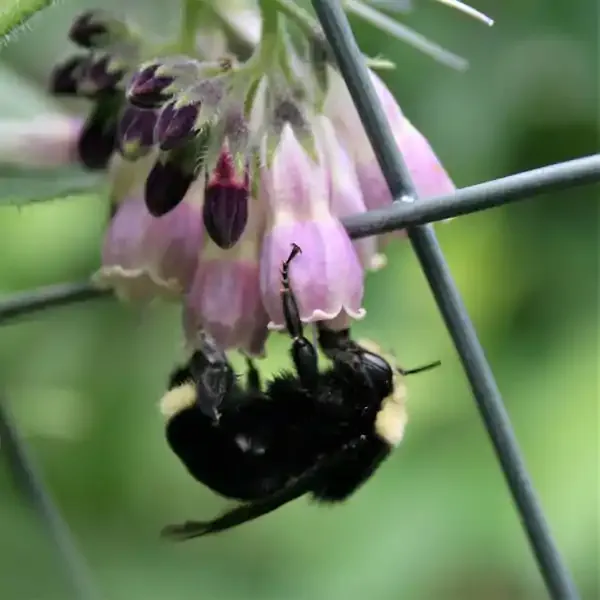
Yellow-faced bumble bee
Bombus vosnesenskii
Yellow-faced bumblebees are familiar visitors to gardens and farms in western Oregon.

Bumblebees are some of the most familiar native bees in the Willamette Valley. Their rounded, fuzzy bodies make them easy to notice as they visit flowers in gardens, farms, and wild places. Along the way, they help pollinate both wildflowers and many of the crops grown in our region.
They can forage in cooler temperatures and lower light than many other bees, making them valuable pollinators on days when fewer bees are flying. Watch one working a flower and you may spot bundles of pollen on her hind legs. These are carried in specialized structures called pollen baskets, ready to take back to the nest.
Bumblebees live in seasonal colonies, with a queen and female workers sharing the work of raising the next generation. Supporting them means providing flowers throughout their active season and places to nest and overwinter. Explore the species below to get to know some of the bumblebees that share our region.
Read about bumblebees from the Xerces Society Read the Willamette Valley bumblebee study
The bumblebees featured here are native to our ecosystem, part of the Willamette Valley's community of wild pollinators. Giving them a place to live and flowers to visit is a practical way to care for the wildlife already around us.
Nesting habits vary by species. Some use underground cavities, often abandoned rodent burrows, while others nest at the ground surface in thick grass or in sheltered above-ground spaces such as old bird nests and bird boxes. Ground nesting and cavity nesting often overlap: an underground burrow is a cavity, too.
Nearby flowers matter. Bumblebees don't usually travel as far from home as honey bees do, and they benefit from a mix of flowers near their nesting site. Foraging distances vary with species and the surrounding landscape. Providing food and nesting habitat together helps keep the resources a new queen needs to get started within reach.
Start with a corner of your yard or garden. A few thoughtful choices can make it more welcoming:
Making room for these little neighbors is a small act of kindness. Planting more flowers, a little less tidying, and leaving a place for wildlife to belong are simple ways to help local pollinators.
Explore Pollinator Resources →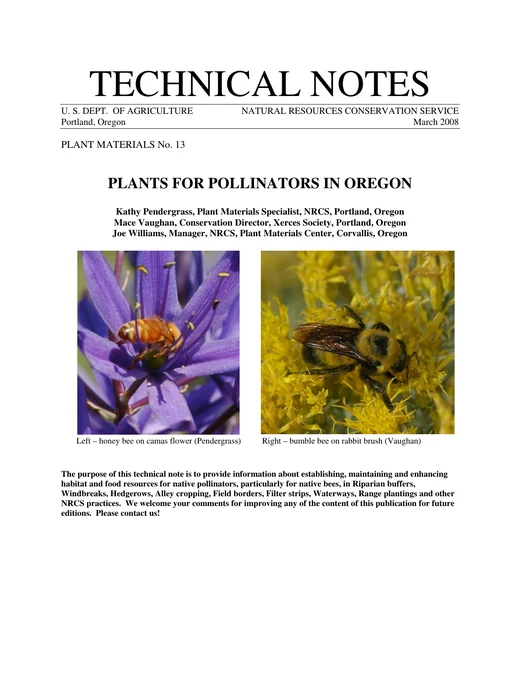
Plants for Pollinators in Oregon
An Oregon guide to establishing and caring for pollinator habitat, with a focus on native bees. Covers choosing plants for local growing conditions, planning flowers through the seasons, and providing nesting areas. Also includes habitat guidance for butterflies.
Read the guide (PDF, 411 KB) · March 2008 · 26 pages
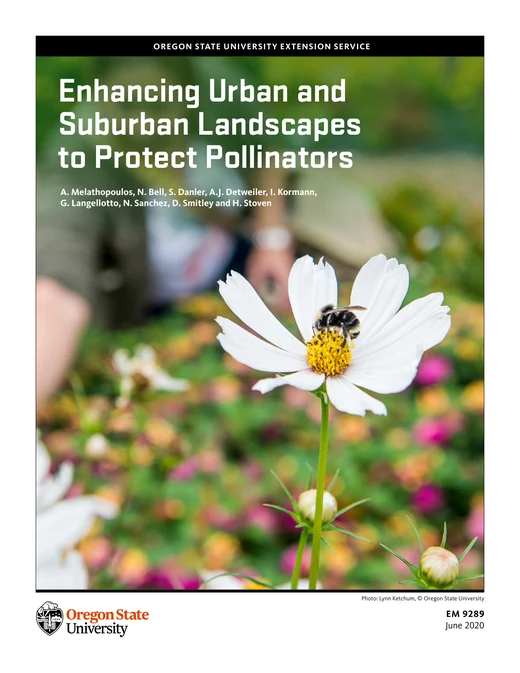
Enhancing Urban and Suburban Landscapes to Protect Pollinators
A Pacific Northwest guide to making yards, gardens, and other landscaped spaces more welcoming to pollinators. Includes plant selection, habitat care, and example garden designs, with an emphasis on areas west of the Cascades.
Read the guide (PDF, 12.8 MB) · June 2020 · 41 pages
Explore PlantNative's Oregon pollinator plant list
Includes both native and nonnative plants.
Read about bumblebee nesting and overwintering Read OSU's native pollinator habitat guide Read the Willamette Valley foraging study
Bombus vosnesenskii
Yellow-faced bumblebees are familiar visitors to gardens and farms in western Oregon.
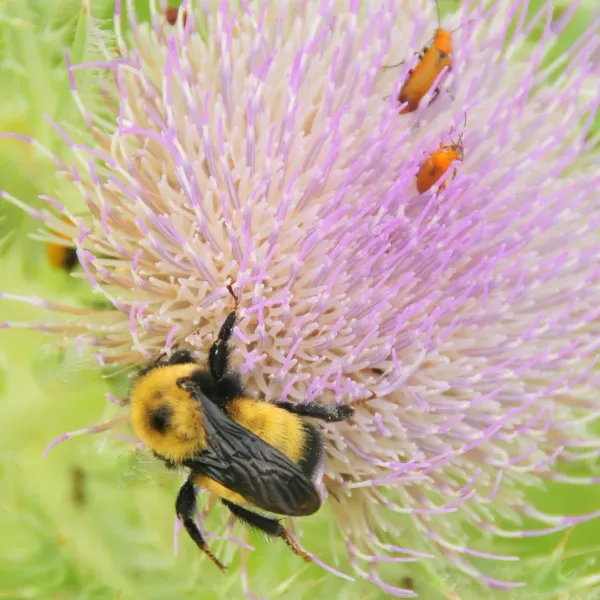
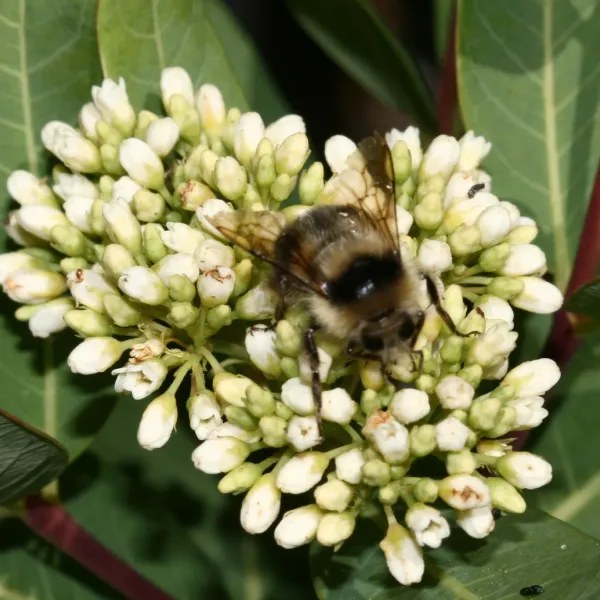
Bombus nevadensis
Nevada bumblebees visit many kinds of flowers in open grasslands and meadows.
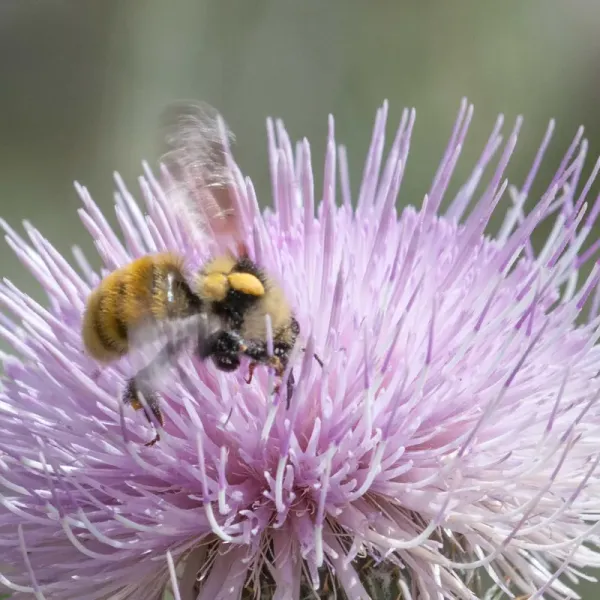
Bombus melanopygus
Black-tailed bumblebees visit a wide variety of flowers, including currants, willows, and blueberries.
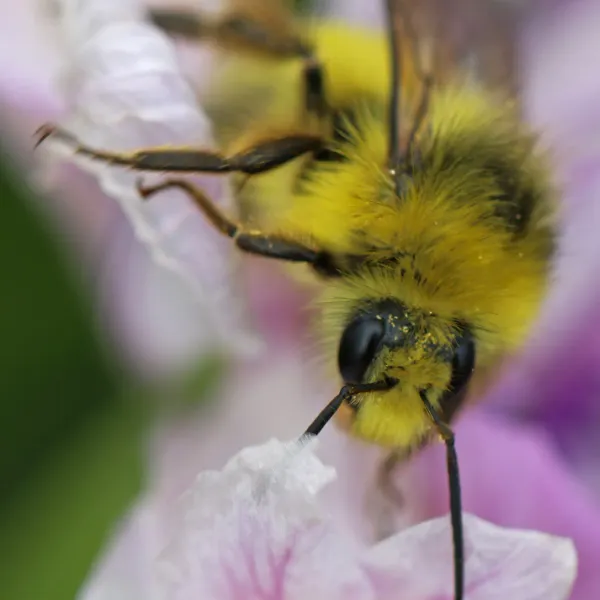
Bombus appositus
Also called the mountain bumble bee, this species occurs in western grasslands, fields, and mountain meadows.
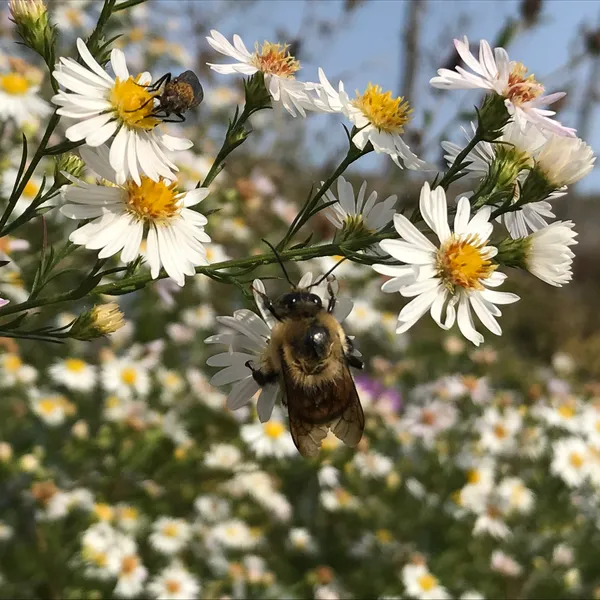
Bombus mixtus
Fuzzy-horned bumblebees occur in grassy openings, wooded landscapes, and mountain meadows.
Bombus griseocollis
Brown-belted bumblebees occur across much of the United States, including western Oregon.
Unlike honey bees with their year-round colonies, bumblebees are seasonal social insects. Each spring, a lone queen emerges from hibernation, finds a suitable nesting site (often an abandoned rodent burrow), and begins raising the first batch of worker bees.
These workers then take over the daily tasks of foraging for nectar and pollen, building the nest, and caring for new larvae. By late summer, the colony produces new queens and males. After mating, only the new queens survive the winter, and the cycle begins again.
Bumblebees are generally docile and rarely sting unless their nest is directly threatened or they're handled roughly. They're excellent pollinators, capable of "buzz pollination," in which they vibrate their flight muscles to shake pollen loose from flowers.
If you discover a bumblebee nest on your property, the best approach is often to leave it alone if possible. The colony is temporary and will die off naturally in the fall. If relocation is necessary due to safety concerns, contact us for humane options.
We can help you understand your options and provide humane solutions.
Get in Touch