A Brief History of Honey Bees
Long before there were bee suits, smokers, or tidy stacks of wooden hive boxes, people already knew that bees were a valuable resource. The oldest evidence we have is not a beekeeper’s journal but rock art: people climbing to reach wild nests and gather honey. Even so, that early chapter was probably more thoughtful than the old “find a hive, destroy a hive” version suggests. Traditional honey-gathering cultures documented much later often revisited the same nest sites, climbed rather than felled nest trees, and in some places were careful to take honeycomb while leaving brood comb behind so the colony could survive. So the first human relationship with bees may have begun not with brute force, but with nerve, memory, and a surprisingly careful hand.
The bees themselves had already been on a long journey of their own. The honey-bee genus, Apis, is rooted in Asia. In fact, all living Apis species besides Apis mellifera are native only to Asia, though a few have since turned up elsewhere through human introductions. Apis mellifera—the western honey bee most modern beekeepers know best—is the exception. Its native range includes western Asia, Africa, and Europe, and researchers think it arose in western Asia before spreading westward over deep evolutionary time (that is, over millions of years rather than over human history). So the “western” honey bee is really an old traveler: Asian in ancestry, then long at home across western Asia, Africa, and Europe before people began carrying it around the world.
By the time people began farming, bee products were already part of daily life in more places than we once realized. Beeswax residues in prehistoric pottery from the Near East, Europe, and North Africa show that people were using bee products thousands of years before formal hives step clearly into view. In the southern Levant, archaeologists have found evidence that Chalcolithic communities used products from likely wild bees. In West Africa, pottery from the Nok culture preserves direct evidence of honey collecting about 3,500 years ago. Those discoveries help fill a gap that used to seem almost empty. Between “person scaling a cliff for honey” and “organized apiary,” there was a long middle ground of people noticing bees, returning to bees, and finding steadier, more deliberate ways to use what bees made.
Then, in ancient Egypt, the story becomes unmistakably visible. Here we can clearly see organized beekeeping: long cylindrical hives made of clay or mud, arranged in rows, with beekeepers using methods that still feel familiar, including smoke to calm the colony. Honey was food, medicine, an offering, and a prestige item all at once. Beeswax mattered just as much, turning up in craft, sealing, ritual, and daily life. It is one of those moments in history when a tiny creature suddenly turns out to be woven into nearly everything important.
Egypt was not alone, though it was especially good at leaving evidence behind. In Anatolia and the wider Near East, bees also appear in law, the economy, and statecraft. Hittite laws included penalties for stealing swarms or hives, which tells us bees were already serious property. Later, in the 8th century BCE, a governor on the Syrian Euphrates boasted that he had brought wild bees down from the mountains and settled them in gardens. That line feels like a hinge in the story: not yet modern beekeeping, but no longer just opportunistic honey gathering either. Someone was already thinking, very clearly, these bees should live closer to us.
For centuries after that, hive design changed more slowly than beekeeper hopes probably did. People used what they had—hollow logs, woven skeps, clay tubes, cork, straw—and bees moved in if the space suited them. The trouble was that most of these were fixed-comb hives. The comb was attached directly to the inside of the hive, which made harvest awkward and often destructive. Getting honey out could mean breaking apart the very architecture the bees had spent so much energy building. It worked, but it was rather like renovating a house by removing one wall with a shovel.
The great leap came in the 19th century. Once beekeepers began building hives around the idea of “bee space”—the narrow gap bees naturally leave open instead of filling with wax or propolis—everything changed. The modern removable-frame hive, most closely associated with Lorenzo Langstroth and patented in 1852, meant that frames could be lifted out, colonies inspected, brood checked, and honey harvested without tearing the whole home apart. The honey extractor soon followed, allowing beekeepers to spin honey from comb without destroying the comb itself. At last, beekeeping stopped being mostly a clever raid on the bees’ pantry and became much more of a partnership.
Not every hive innovation moved in the direction of more machinery and more intervention. In the early 20th century, Abbé Émile Warré in France spent decades comparing hive systems in his apiaries and wrote that he had 350 hives of different systems for side-by-side comparison. By 1923, his L’apiculture pour tous—“Beekeeping for All”—was in print in a form that already set out the hive later known as the Warré or “People’s Hive.” Warré was not trying to out-industrialize modern beekeeping. He was trying to simplify it: less expensive equipment, fewer disruptive manipulations, and a hive that allowed bees to build more naturally. In a history that often moves toward greater efficiency and control, the Warré hive is a useful reminder that some beekeepers were asking a different question altogether: not simply how to get more from bees, but how to ask less of them.
As people got better at keeping bees, they also got more ambitious about moving them. Apis mellifera was carried far beyond its native Old World range: European colonists brought it to North America in the early 17th century, honey bees were successfully introduced to Australia in 1822, and they reached New Zealand in 1839. In the centuries that followed, the western honey bee became one of humanity’s most successful traveling companions—right up there with wheat, chickens, and the mildly alarming habit people have of moving useful things absolutely everywhere.
In modern times, bees took on another job so large it almost changed the meaning of beekeeping itself: crop pollination. But even here, the fuller story matters. Honey bees did not become central to agriculture simply because they are marvelous pollinators, though they are. They became central because industrial agriculture created vast monocultures that bloom all at once and often in landscapes with fewer nesting sites and less year-round forage for wild pollinators. In more diversified farms and more complex landscapes, wild bees, bumblebees, and other native pollinators can do an extraordinary amount of the work, and sometimes do it better, depending on the crop. Honey bees remain vital in modern agriculture, but their starring role is also a story about the kind of food system humans chose to build.
And that brings us to the newest chapter, and for many beekeepers the hardest one: varroa. The varroa mite, Varroa destructor, is now widely recognized as the most damaging parasite of honey bees. It weakens bees directly, spreads viruses through colonies, and has transformed beekeeping from a craft centered mainly on seasons, forage, and honey flows into one that also demands constant parasite management. Worse still, varroa is not a challenge that politely stays solved. Researchers are now tracking growing resistance to some of the treatments beekeepers have depended on, including amitraz in several regions. That is why varroa is not just the current challenge in beekeeping, but very likely the future challenge as well: the defining problem of modern apiculture, and the one that will continue to shape how bees are bred, managed, and protected.
Still, the long view is encouraging. The story of beekeeping has always been a story of paying closer attention. First people noticed where bees lived. Then they learned how to gather from them. Then how to shelter them. Then how to work with them without destroying what the bees had built. And now, in the varroa era, beekeepers are being asked to learn again—more carefully, more creatively, and with a little more humility. Which, if bees have taught us anything over the last several thousand years, is probably exactly how real progress tends to happen.
References for a Deeper Dive
The list below mixes classic history books, primary-source beekeeping texts, archaeology, genetics, pollination research, and modern varroa scholarship. Each item links to the book, article, or source.
-
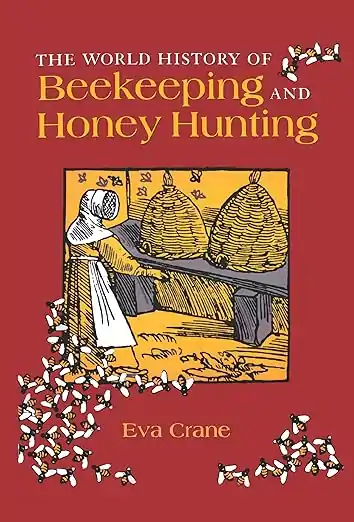
The World History of Beekeeping and Honey Hunting
The broadest single-volume history of honey hunting, apiculture, hive design, and bee products across cultures.
-
The Archaeology of Beekeeping
A foundational archaeological treatment of early bee use, hive remains, and ancient beekeeping evidence.
-
L’apiculture pour tous
Warré’s own statement of the ‘People’s Hive’ and the philosophy behind simpler, lower-intervention beekeeping.
-
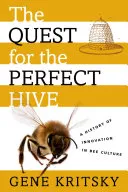
The Quest for the Perfect Hive: A History of Innovation in Bee Culture
A focused, readable history of hive design from ancient systems to modern innovations.
-
The Tears of Re: Beekeeping in Ancient Egypt
One of the best modern scholarly books on Egyptian beekeeping, bee symbolism, and material practice.
-
Industrial Apiculture in the Jordan Valley during Biblical Times with Anatolian Honeybees
The key archaeological paper on the Tel Rehov apiary, one of the most important ancient beekeeping discoveries.
-
Widespread Exploitation of the Honeybee by Early Neolithic Farmers
A landmark residue-analysis paper showing widespread use of bee products in Neolithic pottery.
-
Bee Products in the Prehistoric Southern Levant: Evidence from the Lipid Organic Record
Excellent for bridging the gap between prehistoric bee-product use and later formal beekeeping in the Near East.
-
Honey-Collecting in Prehistoric West Africa from 3500 Years Ago
Direct chemical evidence for honey collecting and bee-product processing in Nok pottery from West Africa.
-
From Where Did the Western Honeybee (Apis mellifera) Originate?
A central paper in the long-running debate over the geographic origin of Apis mellifera.
-
The Complex Demographic History and Evolutionary Origin of the Western Honey Bee, Apis mellifera
A major genomic study on the evolutionary history and demographic spread of the western honey bee.
-
Thrice out of Asia and the Adaptive Radiation of the Western Honey Bee
One of the strongest recent genomic arguments for an Asian origin followed by multiple westward expansions.
-
The Global Stock of Domesticated Honey Bees Is Growing Slower Than Agricultural Demand for Pollination
A concise, influential paper explaining why modern agriculture places such intense demand on managed honey bees.
-
Wild Pollinators Enhance Fruit Set of Crops Regardless of Honey Bee Abundance
Essential reading for the point that wild pollinators often remain crucial even where honey bees are abundant.