Wasps

Wasps in Oregon

Wasps are an important part of Oregon's ecosystems. They hunt insects, help pollinate flowers, recycle nutrients by scavenging, and become food for other wildlife. From our gardens to forests and meadows, these relationships connect wasps to the health of the wider landscape.

The vast majority of wasp species are solitary. OSU Extension estimates that about 99% of described wasp species worldwide are solitary. That is a global figure, not an Oregon count. These wasps live without a colony of workers: a female may stock a small nest for her young or lay eggs in or on another insect.

Our familiar yellowjackets and paper wasps represent the social side of this much larger story. Their shared nests and defensive behavior make them noticeable, but they are not a model for all wasps. Learning the difference helps us make room for these neighbors while addressing nests that put people at risk.

Dealing with Yellowjackets

Yellowjackets help recycle animal remains and hunt other insects, but a nest beside a doorway or play area deserves attention. Start with the situation: an insect visiting food calls for a different response from a colony defending its nest.

Around food and drinks

Cover food and sweet drinks, bring pet food indoors, and keep garbage lids closed. Pick up fallen ripe fruit. Move calmly around foraging wasps; swatting can turn an unwanted visitor into a sting.

Yellowjacket lure traps may reduce nearby foragers. Place them away from seating and eating areas, following the directions. Lures attract some species better than others, and catching workers does not mean a nearby nest is gone.
Near a suspected nest

Watch from a distance for repeated flights into one ground hole or building opening. Keep children and pets away, and avoid mowing or other disturbance beside it. Never approach a nest just to identify the species.

If you disturb a nest and wasps attack, leave the area quickly. OSU advises running away from a disturbed nest; this differs from staying calm around a single foraging wasp.

Deciding whether to act

A nest away from regular activity may be left undisturbed. If people cannot avoid it, or someone nearby has a known sting allergy, consult a licensed pest professional. Nest treatment carries a real risk of multiple stings.

Avoid spraying individual flying wasps. Use OSU's current guidance to weigh management options for your situation.

Why Wasps Matter

Wasps belong in the story of a healthy landscape. Their ecological roles extend beyond whether we find a particular insect useful in the garden. Some species are introduced, and some eat insects we also value; appreciating wasps does not require calling every species harmless.

Hunters in the garden

Paper wasps collect caterpillars for their young. Other wasps hunt different prey, connecting plants, plant-eating insects, and predators in the same food web. Their hunting can help reduce crop and garden pests.

Flower visitors

Adult wasps visit flowers for nectar and can carry pollen between blooms. A wasp at a flower may be feeding itself even when its young need animal food. Watch quietly and you may see several kinds using the same flower patch.

Small but influential

Parasitoid wasps lay eggs in or on a host. Their young develop at that host's expense, eventually killing it. This can help limit populations of aphids, caterpillars, and other insects.

Part of a larger web

Wasps themselves feed other wildlife. Scavenging species also help return nutrients from dead animals to the ecosystem. Plant-feeding wasps, including gall makers, add still more relationships to this web of life.

For a wasp-friendly garden, provide flowers across the growing season and limit unnecessary insecticide use. Tolerating some leaf damage leaves food for the next link in the food web.

A Year in a Yellowjacket Colony

In the Pacific Northwest, a yellowjacket colony usually lasts one growing season. Each wasp develops through four stages: egg, larva, pupa, and adult. Here is how those individual lives fit into the colony's year.

  1. Spring: one queen begins

    A mated queen emerges from winter shelter, starts a paper nest, and raises the first workers herself.

  2. Summer: the colony grows

    Workers take over food gathering and brood care while the queen lays eggs. More workers mean more mouths to feed and a larger nest.

  3. Late summer & fall: a new generation

    Colonies produce males and future queens. Many reach their largest size around August or September, though timing varies with species and conditions.

  4. Winter: the colony ends

    Workers and the old queen die. Newly mated queens shelter through winter and start fresh nests in spring; the old colony does not move into its nest again.

A solitary mother's story

A mud dauber works alone. She builds a mud cell, stocks it with paralyzed spiders, lays an egg, and seals it. Her larva eats the stored food and later pupates. There is no worker colony tending it.

A life inside another insect

A parasitoid mother searches for a suitable host instead of stocking a nest. Her offspring feed on that host, pupate, and emerge as adults. Species differ in the hosts and life stages they use, so there is no single seasonal calendar for all wasps.

Meet Some of Oregon's Wasps

Start with these familiar species and broader groups. This is an introduction, not a complete Oregon checklist or a ranking by abundance. Photographs show examples; markings alone are not always enough for a confident identification.

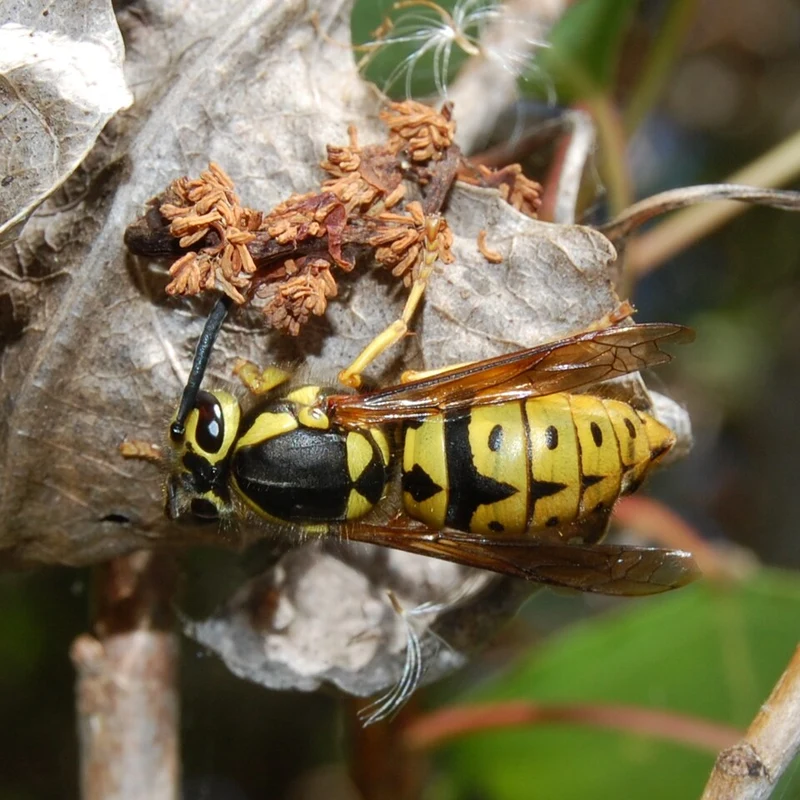
Western yellowjacket queen with yellow and black abdominal markings

Western Yellowjacket

Vespula pensylvanica

Stocky and boldly marked in yellow and black. Often nests in underground cavities and scavenges at outdoor meals. Workers also gather animal food for their larvae. Give nest entrances plenty of room.

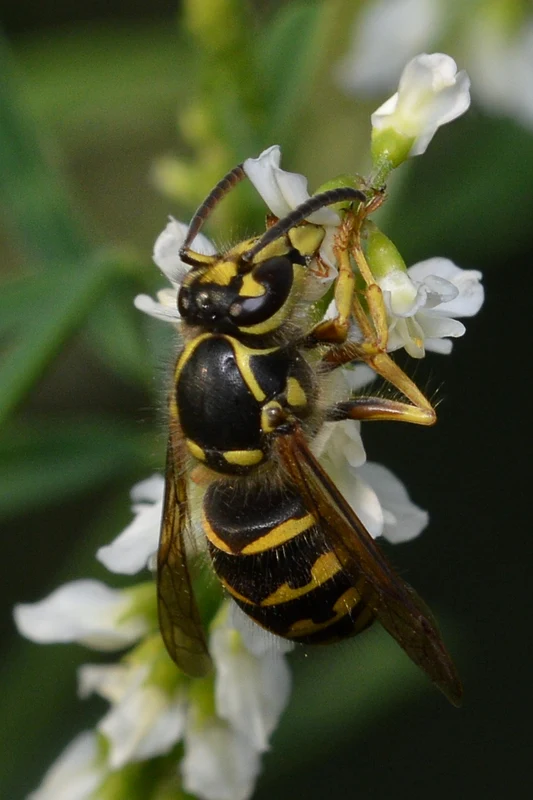
Aerial yellowjacket visiting small white flowers

Aerial Yellowjacket

Dolichovespula arenaria

Builds enclosed paper nests above ground, often in trees. It is less likely to bother a picnic than scavenging ground nesters, but will vigorously defend a disturbed nest.

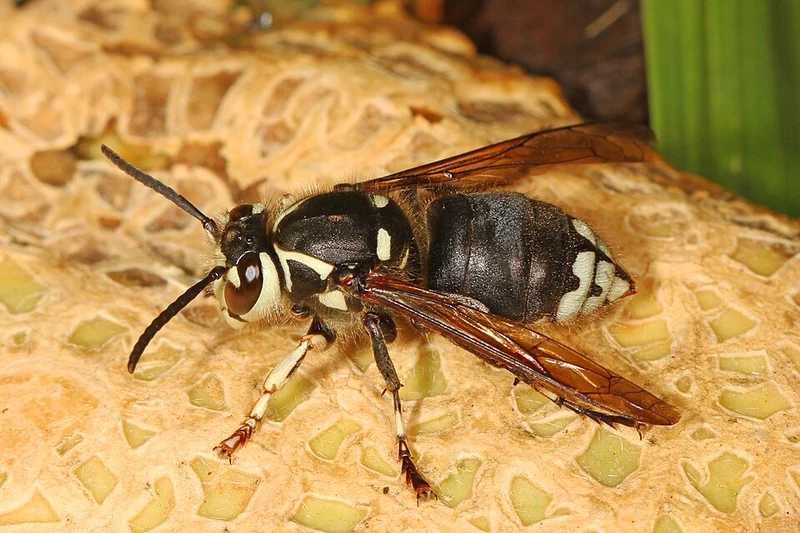
Black and ivory bald-faced hornet on a plant

Bald-faced Hornet

Dolichovespula maculata

Look for black and ivory markings and a pale face. Despite its name, this is a kind of yellowjacket. Its enclosed paper nest is usually above ground. Observe from afar: nest defense can be intense.

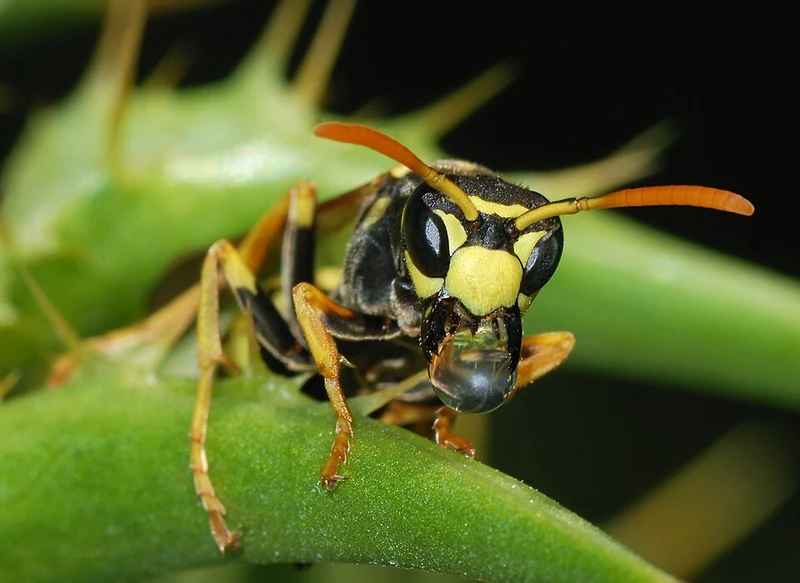
European paper wasp showing its orange antennae

European Paper Wasp

Polistes dominula

A frequent neighbor around buildings, with a slender waist, long legs, and orange antennae. Its open paper comb exposes the cells. It hunts caterpillars but can sting when the nest is disturbed.

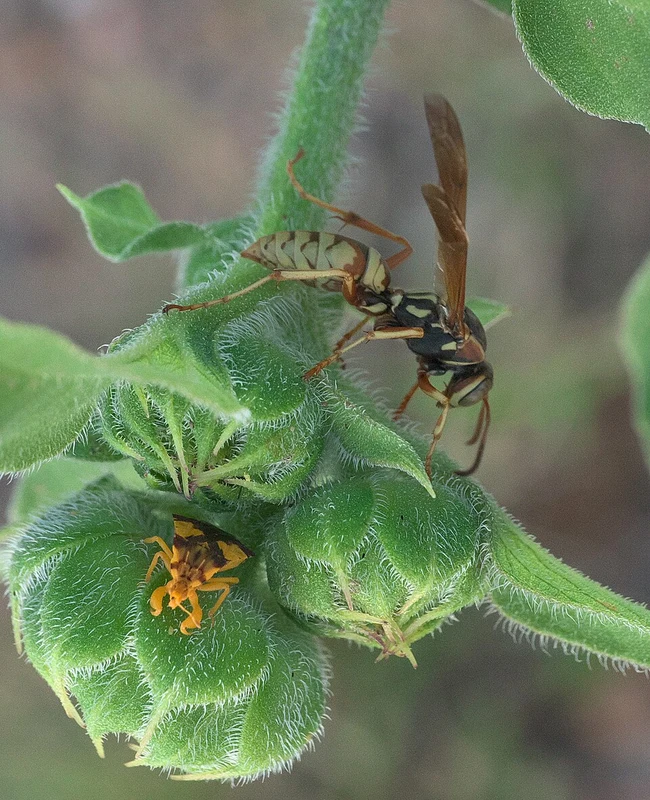
Golden paper wasp on vegetation

Golden Paper Wasp

Polistes aurifer

A native Pacific Northwest paper wasp, less frequently encountered than the introduced European species. It builds an open comb and gathers insects for its young. Brown and yellow coloring is a useful starting clue, not a complete identification.

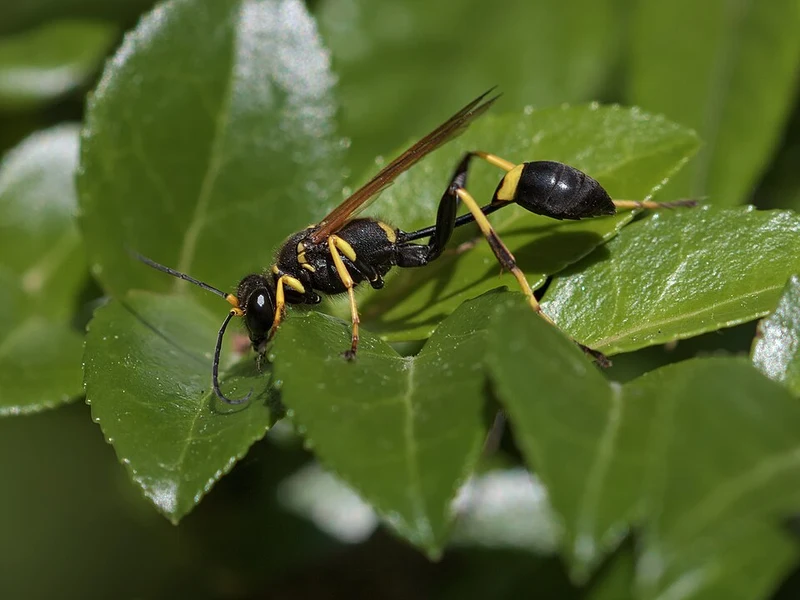
Black-and-yellow mud dauber showing a long narrow waist

Black-and-yellow Mud Dauber

Sceliphron caementarium

Its long, threadlike waist sets it apart from a yellowjacket. A female builds mud cells and fills them with spiders for her young. There is no defensive worker colony, though handling or trapping a wasp against skin can provoke a sting.

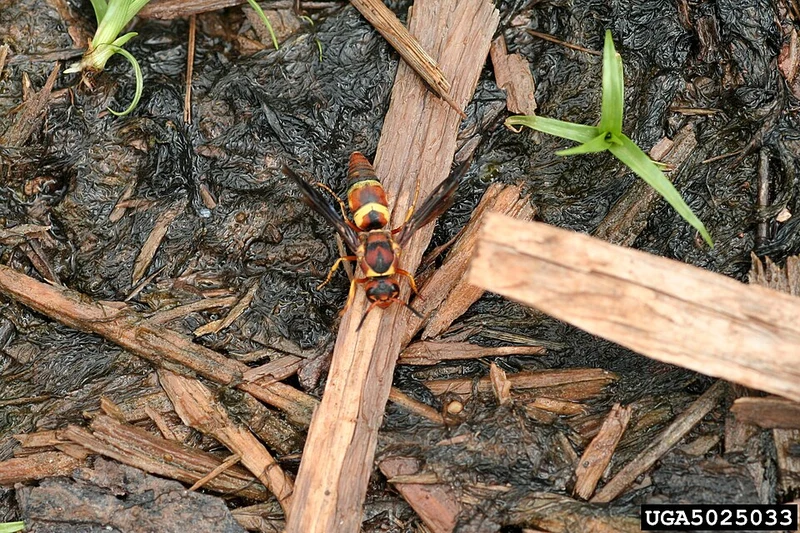
Euodynerus mason wasp on damp ground

Mason & Potter Wasps

Eumeninae

These caterpillar hunters use mud in their nests. Mason wasps often occupy existing cavities; potter wasps may build small mud pots. Each stocked cell shelters a developing young wasp. The photograph shows a mason wasp in the genus Euodynerus.

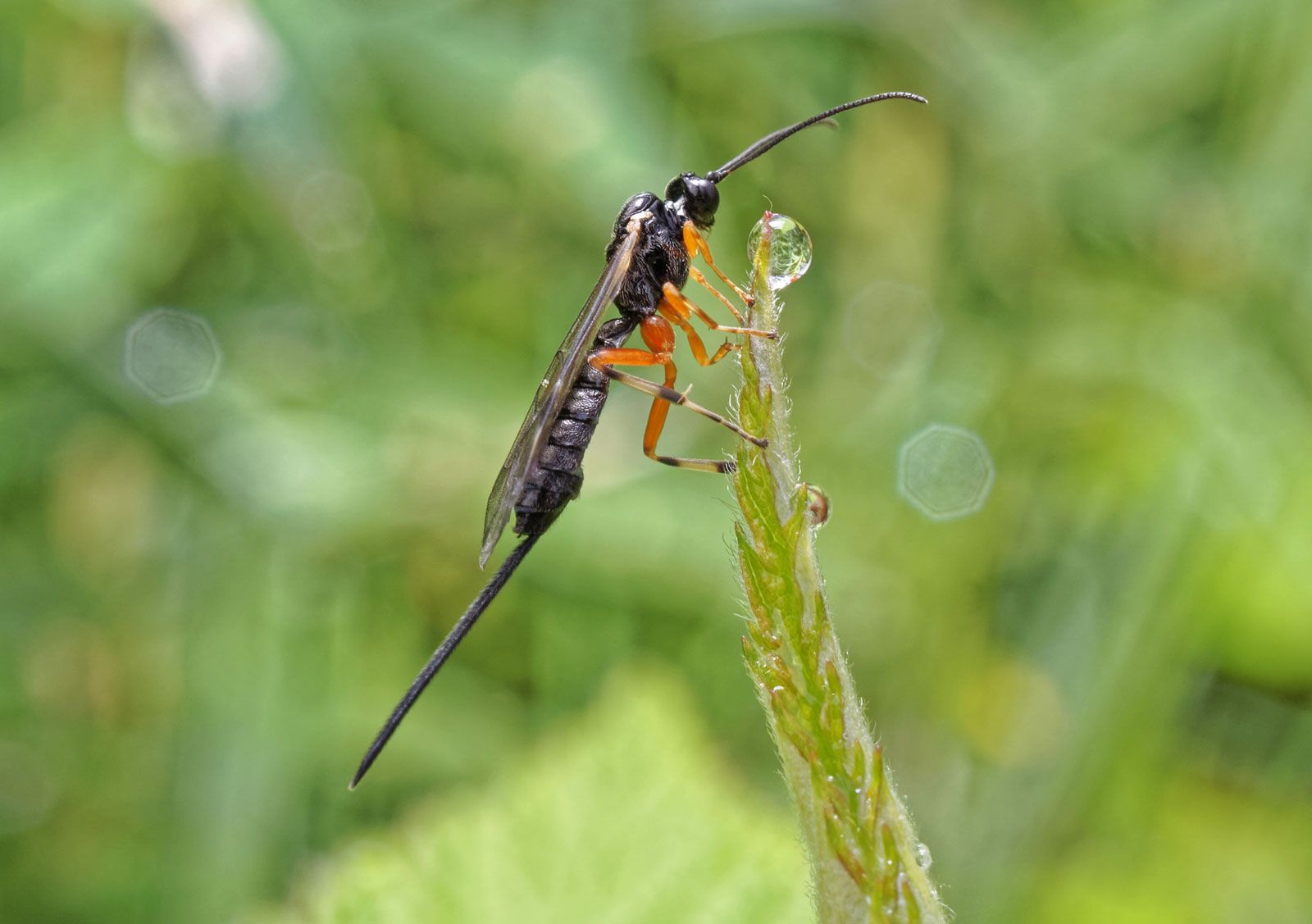
Ichneumon wasp with orange legs and long antennae perched on a green stem

Ichneumon Wasps

Ichneumonidae

Often slender, with long antennae. Females use an egg-laying organ called an ovipositor to reach a host. Different species use different hosts. This photograph illustrates the wider ichneumon wasp family.

Observe from a comfortable distance. A wasp foraging on a flower and the same species defending a nest can behave very differently. The mason wasp and ichneumon cards represent whole groups, not a claim that their pictured species is among Oregon's most common.

Keep Exploring

These university resources offer more detail on identification, biology, and practical decisions.

The WSU guide dates to 2003 and is useful for the regional colony lifecycle. For management choices, use the current OSU guide above and current product labels.

Photographs & licenses

Photographs illustrate the species or group and were not all taken in Oregon. Card images are cropped to square frames for display. Source and license information is listed below. Open each source for the original photograph and location.

Solitary wasp

A solitary wasp has no colony of workers helping raise her young. A female may stock her own nest cells with food, or find a host for her developing offspring. Solitary describes social life; parasitoid describes a feeding strategy. A wasp can be both.

Social wasp

Social wasps share a nest and cooperate in raising young. In yellowjacket and paper wasp colonies, reproductive females lay eggs and workers help feed the brood and maintain the nest. They can defend that nest, so observing a forager is different from approaching a colony.

Non-native Social wasp

This is a social wasp introduced beyond its natural range. In this case the European paper wasp was introduced to North America from Europe, probably hidden in shipping materials. Non-native describes its origin, while social describes colony life.