Most bee encounters are less worrying than they first seem. From a
safe distance, look at where the insects are and what they’re
doing, then choose the description that fits best.
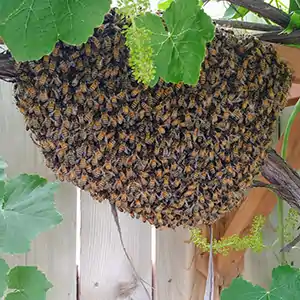
A hanging cluster of bees
This is probably a honey bee swarm. Swarms are usually calm, so call or text us.
A swarm is a colony on the move. The bees gather around their
queen on a branch, fence, or wall while scouts search for a new
home. They’re full of honey and focused on staying
together. Please don’t spray or disturb them; give them
space while you get in touch.
We collect honey bee swarms for free in Eugene and Springfield.
Text a photo taken from a safe distance and your approximate
location.
Call or Text (541) 854-0358
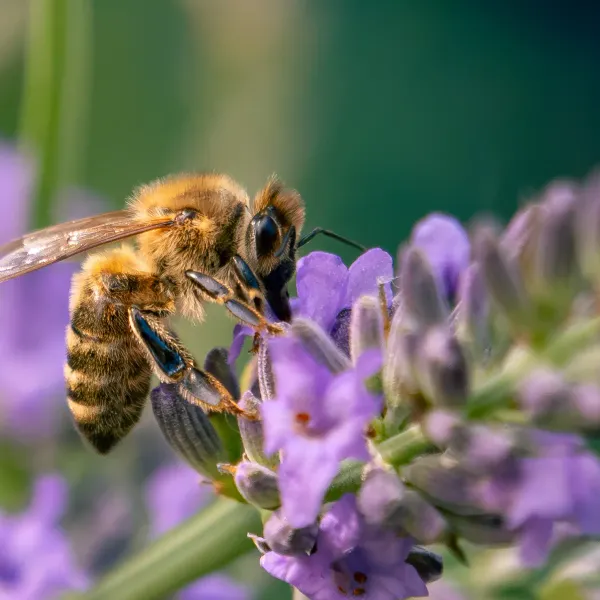
Bees going in and out of a wall, roof, or chimney
This is likely an established honey bee colony, which needs a specialist.
Once a colony has built comb inside a structure, removal usually
means opening it up, taking out the bees and comb, and cleaning up
the honey and wax so new bees aren’t drawn back later. Plan
Bees doesn’t do these removals, but the
Lane County Beekeepers Association keeps a list of beekeepers who do.
Yellowjackets nest in walls too. If the insects are smooth, shiny,
and bright yellow and black, see papery nests and wasps below.
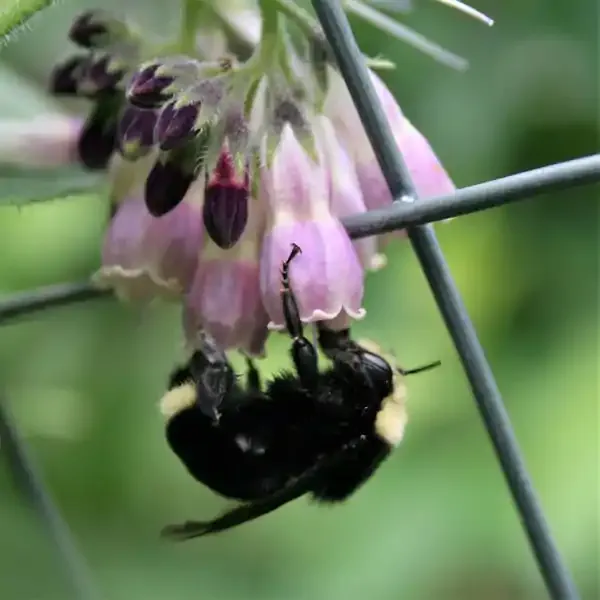
Fuzzy bees using a hole in the ground or a birdhouse
This is probably a bumblebee nest. It’s temporary, and the bees are usually gentle.
Bumblebees often nest in old rodent burrows, thick grass, or
sheltered spots such as bird boxes. Their colonies last a single
season: only the new queens survive the winter, and the old nest
isn’t reused. When a nest finishes varies with the species
and conditions.
Bumblebees rarely sting unless their nest is threatened or
they’re handled. Where people can safely give them space,
leaving the nest alone is often the best choice. If that
isn’t possible, contact us to talk through your options.
Meet our local bumblebees
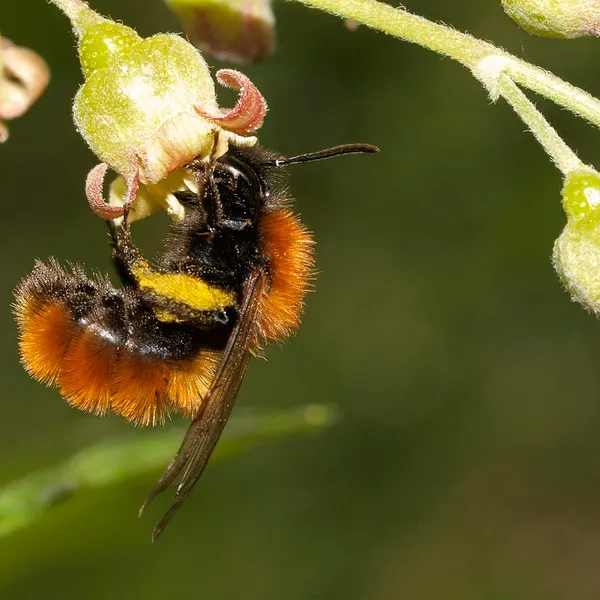
Many small bees over bare soil or lawn in spring
These are likely mining bees or other ground-nesting bees. They’re gentle, and they’ll be gone within weeks.
Each female digs her own tunnel, so a patch of ground may be
dotted with small holes, each in the middle of a little cone of
soil. Hundreds of nests can share one sunny patch, but every bee
is working on her own. Many of these species fly for only about
six to eight weeks in spring.
Ground-nesting bees aren’t aggressive, and the males, often
the ones patrolling the nest site, have no stinger at all. They
pollinate early flowers and fruit trees, so they’re good
neighbors to have. If you see a single hole with a steady stream
of wasps instead, read the next section.
Explore native bees
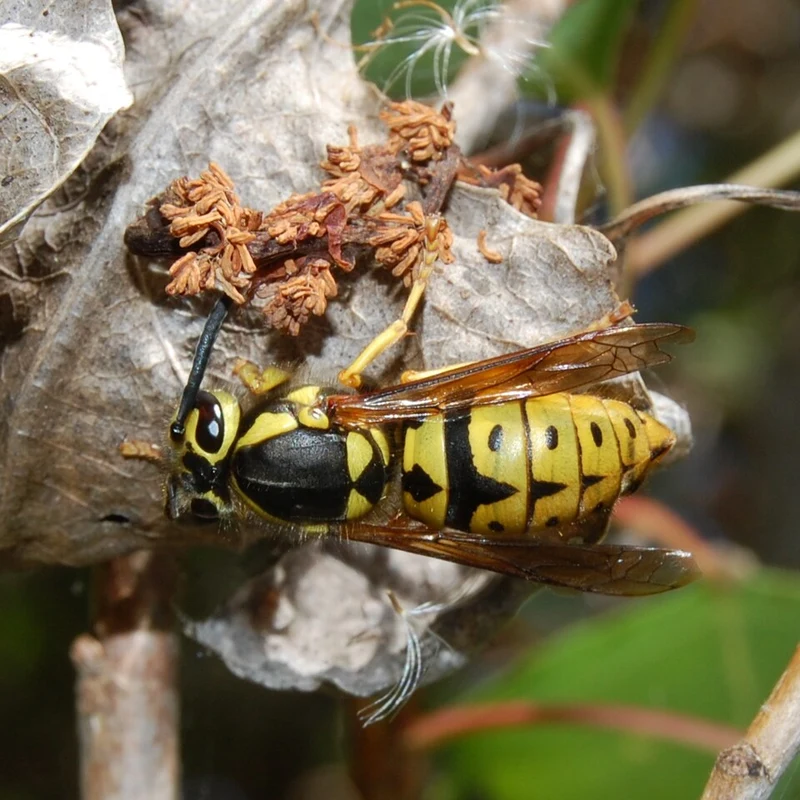
A papery nest, or wasps at your picnic
These are wasps, most likely yellowjackets or paper wasps.
Wasps build their nests from chewed wood fibers, which gives them
a papery look. Keep children and pets away from a nest, and
don’t approach it just to identify the species. Around food,
cover sweet drinks and move calmly; swatting can turn an unwanted
visitor into a sting.
Read our yellowjacket guide
Someone was stung
Call 911 for trouble breathing, swelling of the face or mouth, throat tightness, difficulty swallowing, or faintness after a sting.
If someone has been prescribed emergency epinephrine, use it as
directed while getting emergency help.
For most people, a sting causes pain and swelling around the spot.
If a honey bee left its stinger in the skin, scrape it out right
away; how quickly you remove it matters more than how. Then wash
the area and apply a cold pack wrapped in cloth.
