
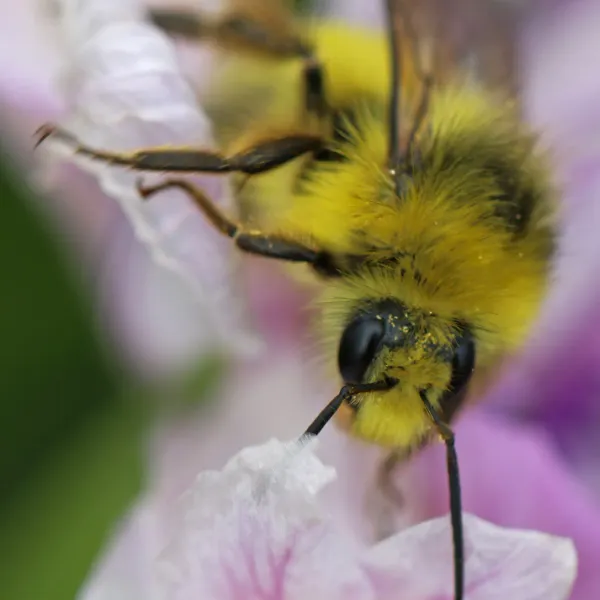
Fuzzy-horned bumble bee
Bombus mixtus
Nesting Preference
Uses sheltered sites below ground, on the ground surface, and above ground. Studies have documented many surface and above-ground nests.
Active Time of Year
An early-emerging species, active through spring and summer. Queens have been recorded in late winter in Washington; weather and elevation affect when local bees appear.
Identifying Characteristics
A relatively small bumblebee with long, uneven hair. Queens and workers often have a cloudy mix of yellow and black on the thorax, yellow near the front of the abdomen, and pale orange toward the tail. Color varies, and similar species require careful comparison. Hairy antennae alone are not a reliable identification shortcut.
Fun Fact
Fuzzy-horned bumblebees have been recorded visiting both commercial blueberry and cranberry crops in British Columbia.
Fuzzy-horned bumblebees occur in grassy openings, wooded landscapes, and mountain meadows. They also occur in the Willamette Valley, where OSU researchers recorded them in agricultural fields. Their varied nesting sites are a reminder that bumblebee habitat includes more than underground burrows.