
Nevada bumble bee
Bombus nevadensis
Nesting Preference
Usually nests underground, with some nests recorded at the ground surface.
Active Time of Year
Spring through summer, with timing varying by location and elevation. It has been recorded during both spring blueberry bloom and summer red clover bloom in the Willamette Valley.
Identifying Characteristics
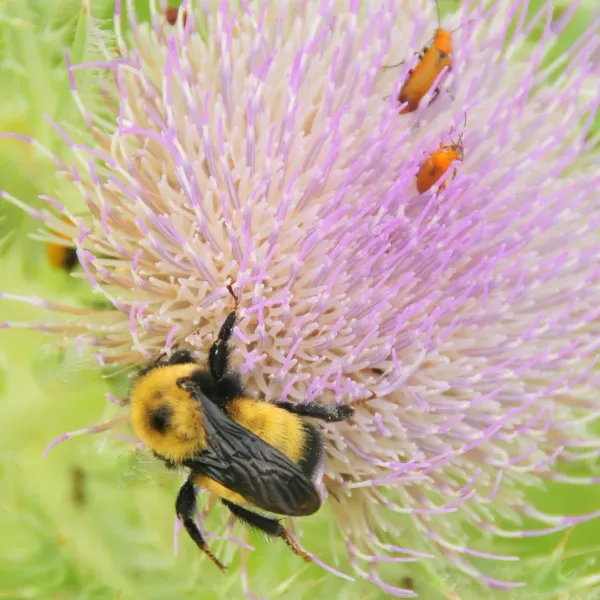
A large bumblebee with a long face. Queens and workers have mostly black facial hair, a largely yellow thorax, and yellow on the second and third abdominal segments, followed by a black tail. The first abdominal segment can be yellow or black. Size and color alone do not establish an identification.
Fun Fact
Its name does not limit it to Nevada: this species occurs across a broad area from the Pacific coast east to the Great Plains.
Nevada bumblebees visit many kinds of flowers in open grasslands and meadows. They are long-tongued bees, with recorded visits to plants including penstemons, clovers, and blueberries. Oregon Department of Agriculture guidance includes this species among the bumblebees of the Willamette Valley.