
Yellow-faced bumble bee
Bombus vosnesenskii
Nesting Preference
Usually nests in existing underground cavities, including abandoned rodent burrows. Other sheltered nest sites are also documented.
Active Time of Year
An early-emerging species, active from spring through summer and sometimes into fall. Queens can appear in late winter in milder parts of its range; local timing varies.
Identifying Characteristics
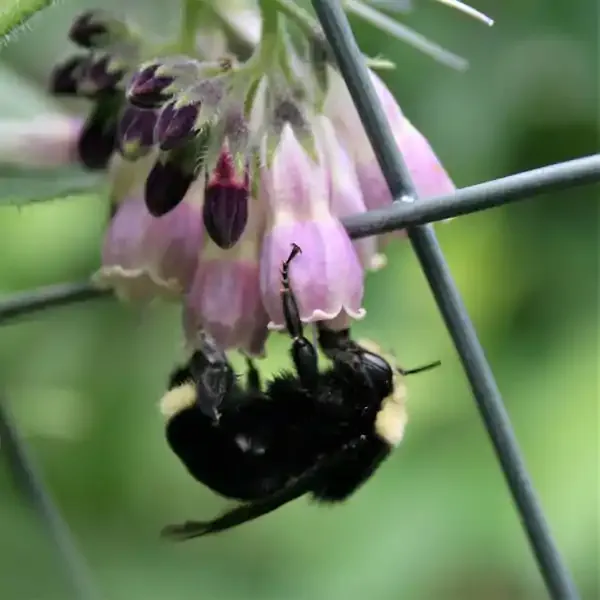
Queens and workers have yellow facial hair and a yellow band at the front of the thorax (the middle body section). Most of the abdomen is black, with a yellow band on its fourth segment. The rear of the thorax is black. Similar species, especially the obscure bumble bee, can be difficult to separate from a quick view.
Fun Fact
Like other bumblebees, yellow-faced bumblebees can use their flight muscles to vibrate flowers and release pollen. This is called buzz pollination, and it helps them gather pollen from flowers such as blueberries.
Yellow-faced bumblebees are familiar visitors to gardens and farms in western Oregon. OSU studies published in 2010 found them to be the most abundant bumblebee observed foraging in the Willamette Valley blueberry and red clover fields studied. That finding describes those surveys, rather than a permanent ranking of every local habitat.