
Lorquin's Admiral
Limenitis lorquini
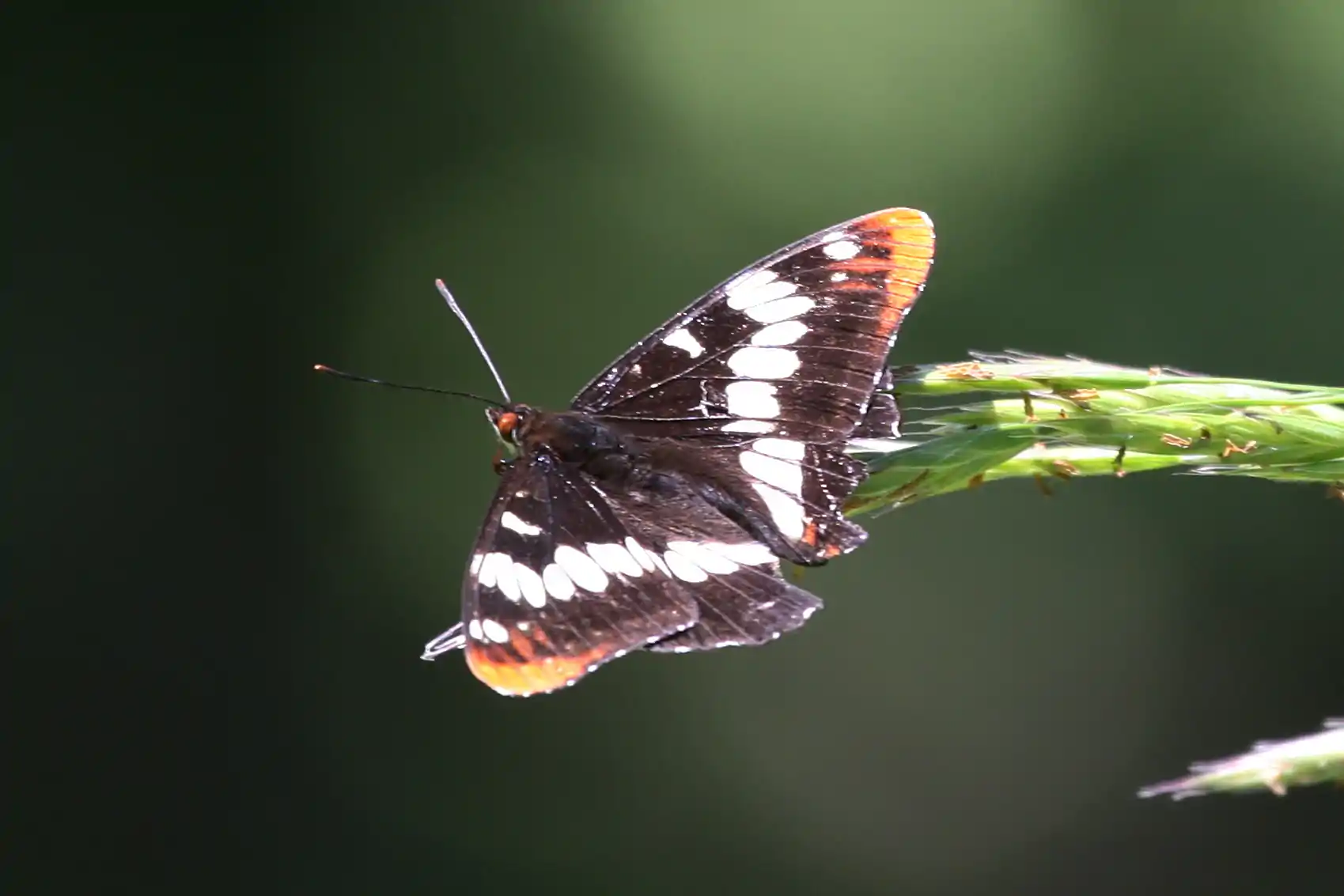
Adults Fly
May–August (sometimes into September in warm years).
Eggs Laid
Late May–July (often 1–2 broods depending on year).
Larvae Active
June–September; young larvae may enter dormancy for winter.
Overwintering
Overwinters as a small larva in a silked leaf shelter (hibernaculum) attached to a twig.
Conservation (NatureServe)
G5 (Secure)
Widespread; most vulnerable locally where riparian habitat is simplified or removed.
Caterpillar Host Plants (Willamette Valley natives)
- Scouler's willow Salix scouleriana — Common native willow; great in riparian and edge habitats.
- Pacific willow Salix lucida ssp. lasiandra — Native streamside willow.
- Sitka willow Salix sitchensis — Native willow of wetter sites.
- Black cottonwood Populus trichocarpa — Signature Willamette riparian tree; key host for many butterflies.
Favorite Nectar Flowers (Willamette Valley natives)
- Douglas aster Symphyotrichum subspicatum — Late-season nectar near water.
- Canada goldenrod Solidago canadensis — Late-season nectar; thrives in sunny openings.
- Common yarrow Achillea millefolium
- Snowberry Symphoricarpos albus — Shrub with summer flowers; excellent in hedgerows.
- Pacific ninebark Physocarpus capitatus — Shrub with clustered blooms; good along streams.
What the Caterpillars Eat
Leaves of willows (Salix) and cottonwoods (Populus).
Lorquin’s Admiral is one of the Willamette Valley’s most classic woodland butterflies: velvety black wings, a crisp white band, and warm orange accents. Look for it in riparian corridors—along the Willamette River, creek paths, wetland edges, and any sunny opening near willows.
The caterpillars are leaf-eaters on native willows and cottonwoods. They’re masters of camouflage and shelter-building, often resting on leaves where their shape and posture help them vanish into the plant.
Adults are famously not picky about ‘food.’ They’ll nectar, but they also love tree sap, damp spots, and even fermenting fruit. If you want to support them, think healthy riparian habitat plus a ribbon of native flowers nearby.
Fun Facts
- Males often choose a sunny perch and defend it like a tiny bouncer—watch for repeated ‘patrol loops’ along the same stretch of trail.
- Adults frequently prefer sap and fruit over flowers, so they’re sometimes called ‘tree-juice butterflies.’