
Anise Swallowtail
Papilio zelicaon
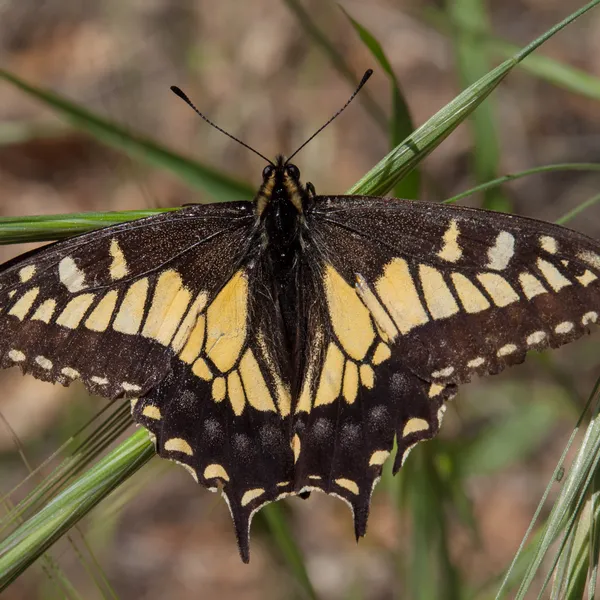
Adults Fly
March–October (peak April–June and again in mid-to-late summer).
Eggs Laid
March–September (often multiple broods).
Larvae Active
April–October.
Overwintering
Overwinters as a pupa (chrysalis).
Conservation (NatureServe)
G5 (Secure)
Common and widespread; strongly tied to availability of Apiaceae host plants.
Caterpillar Host Plants (Willamette Valley natives)
- Spring gold (biscuitroot) Lomatium utriculatum — OSU notes this genus as a larval host for the Anise Swallowtail.
- Fernleaf biscuitroot Lomatium dissectum — Native; often in drier prairie/foothill sites.
- Gairdner's yampah Perideridia gairdneri — Native; common in open woods and meadows.
- Cow parsnip Heracleum maximum — Native; robust plant along edges and moist sites.
- Western sweet cicely Osmorhiza berteroi — Native; woodland edge umbel.
Favorite Nectar Flowers (Willamette Valley natives)
- Oregon sunshine Eriophyllum lanatum
- Douglas aster Symphyotrichum subspicatum
- Showy milkweed Asclepias speciosa
- Common yarrow Achillea millefolium
- Western red columbine Aquilegia formosa
- Canada goldenrod Solidago canadensis
- Common camas Camassia quamash — Spring nectar in wet meadows (adults often visit nearby).
What the Caterpillars Eat
Leaves and tender growth of native Apiaceae (especially Lomatium, Perideridia, Heracleum, Osmorhiza).
The Anise Swallowtail is a familiar sight in the Willamette Valley from early spring into fall—often gliding over fields, roadsides, and gardens, then suddenly climbing high to ‘hilltop’ on ridgelines. It’s one of our most adaptable swallowtails, and it shows up anywhere its host plants grow.
Caterpillars feed on members of the parsley family (Apiaceae)—including several native biscuitroots and yampah that bloom in spring. That means native plantings can support the whole life cycle: early-season larval host plants, plus later nectar plants for adults.
Anise Swallowtails typically overwinter as chrysalises, sometimes enduring surprisingly cold conditions. When you see the first adults in spring, you’re often looking at a butterfly that has been ‘waiting it out’ since last year.
Fun Facts
- The ‘anise’ name comes from the caterpillar’s association with fennel in some places, but in native habitat it often relies on biscuitroots and other native parsley-family plants.
- Swallowtail chrysalises can be green or brown depending on where they form—blending into leaves or twigs like living camouflage.