
Gray Hairstreak
Strymon melinus
Adults Fly
April–October (sometimes into early November in warm years).
Eggs Laid
April–September (often multiple broods; timing depends on spring warmth).
Larvae Active
May–October.
Overwintering
Overwinters mainly as a pupa (chrysalis) in sheltered spots (leaf litter, bark crevices, tucked vegetation).
Conservation (NatureServe)
G5 (Secure)
Widespread with many occurrences; still benefits from diverse native plant habitat.
Caterpillar Host Plants (Willamette Valley natives)
- Bigleaf lupine Lupinus polyphyllus — Legume; a native lupine in the valley and foothills.
- American vetch Vicia americana — Legume; common along edges and open woods.
- Nevada pea Lathyrus nevadensis — Legume; woodland/edge pea native to western Oregon.
- Meadow checkermallow Sidalcea campestris — Mallow family; a Willamette Valley native with showy pink blooms.
- Nootka rose Rosa nutkana — Sometimes used by hairstreaks; also excellent structure for habitat.
Favorite Nectar Flowers (Willamette Valley natives)
- Douglas aster Symphyotrichum subspicatum — Late-season nectar; a top native for butterflies.
- Oregon sunshine Eriophyllum lanatum — Summer nectar; thrives in sunny, drier sites.
- Common yarrow Achillea millefolium — Long bloom; great landing platform for small butterflies.
- Pearly everlasting Anaphalis margaritacea — Dry-site native with long-lasting blooms.
- Showy milkweed Asclepias speciosa — Strong nectar draw in mid-summer.
What the Caterpillars Eat
Primarily flowers and leaves of host plants—especially native legumes (lupines, vetches, peas) and mallows (checkermallow).
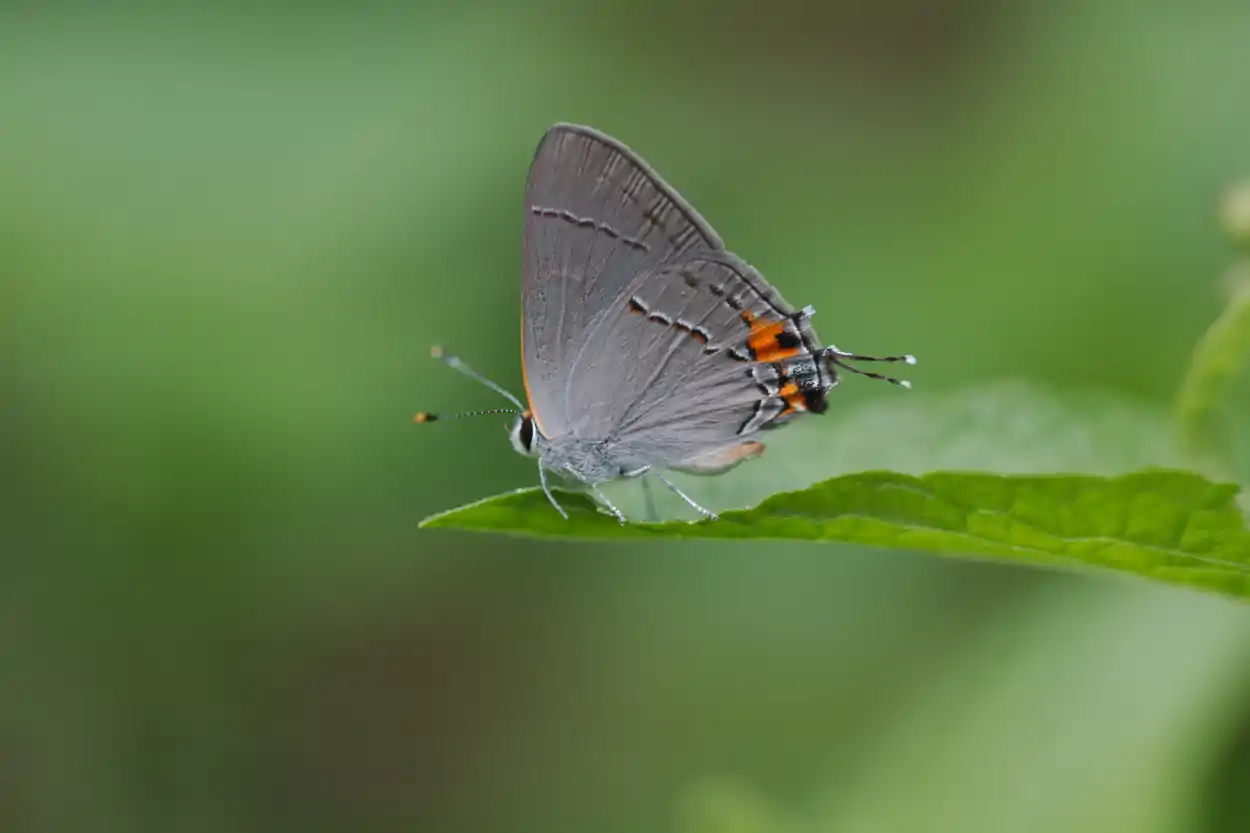
The Gray Hairstreak is one of those butterflies you start noticing everywhere once you learn its look: soft gray wings, a thin white line, and a pair of tiny tails on each hindwing. In sunny yards, parks, and weedy edges around Eugene, it’s a frequent visitor that never seems in a hurry—until it suddenly zips off like a wind-up toy.
What makes this species especially successful is flexibility. The caterpillars can use a wide range of host plants (especially native legumes and mallows), which helps the Gray Hairstreak show up in all kinds of habitats—from restored meadows to backyard borders.
Adults nectar on many small, flat-topped flowers, and you’ll also see them ‘puddling’ on damp soil for minerals. If you’re planting for them, aim for a long bloom season and a few native legumes tucked into the mix.
Fun Facts
- The tails and orange spot create a ‘false head’—predators often strike the wrong end, letting the butterfly escape.
- Many hairstreak caterpillars have relationships with ants; the ants may ‘tend’ them in exchange for sugary secretions.