
Painted Lady
Vanessa cardui
Adults Fly
March–October (numbers vary wildly year to year).
Eggs Laid
April–September (timing depends on when migratory waves arrive).
Larvae Active
April–October.
Overwintering
Mostly does not overwinter in the Willamette Valley; populations are replenished by migration from warmer regions.
Conservation (NatureServe)
G4 (Apparently Secure)
Generally widespread; populations fluctuate and can be affected by weather and habitat availability.
Caterpillar Host Plants (Willamette Valley natives)
- Short-styled thistle Cirsium brevistylum — Native thistle of wet meadows and riparian edges.
- Douglas' thistle Cirsium douglasii — Native thistle of prairies and open sites.
Favorite Nectar Flowers (Willamette Valley natives)
- Douglas aster Symphyotrichum subspicatum — A Painted Lady magnet in late summer/fall.
- Canada goldenrod Solidago canadensis
- Oregon sunshine Eriophyllum lanatum
- Pearly everlasting Anaphalis margaritacea
- Showy milkweed Asclepias speciosa
What the Caterpillars Eat
Leaves (and sometimes flower parts) of native thistles (Cirsium spp.); larvae often spin a light silk ‘nest.’
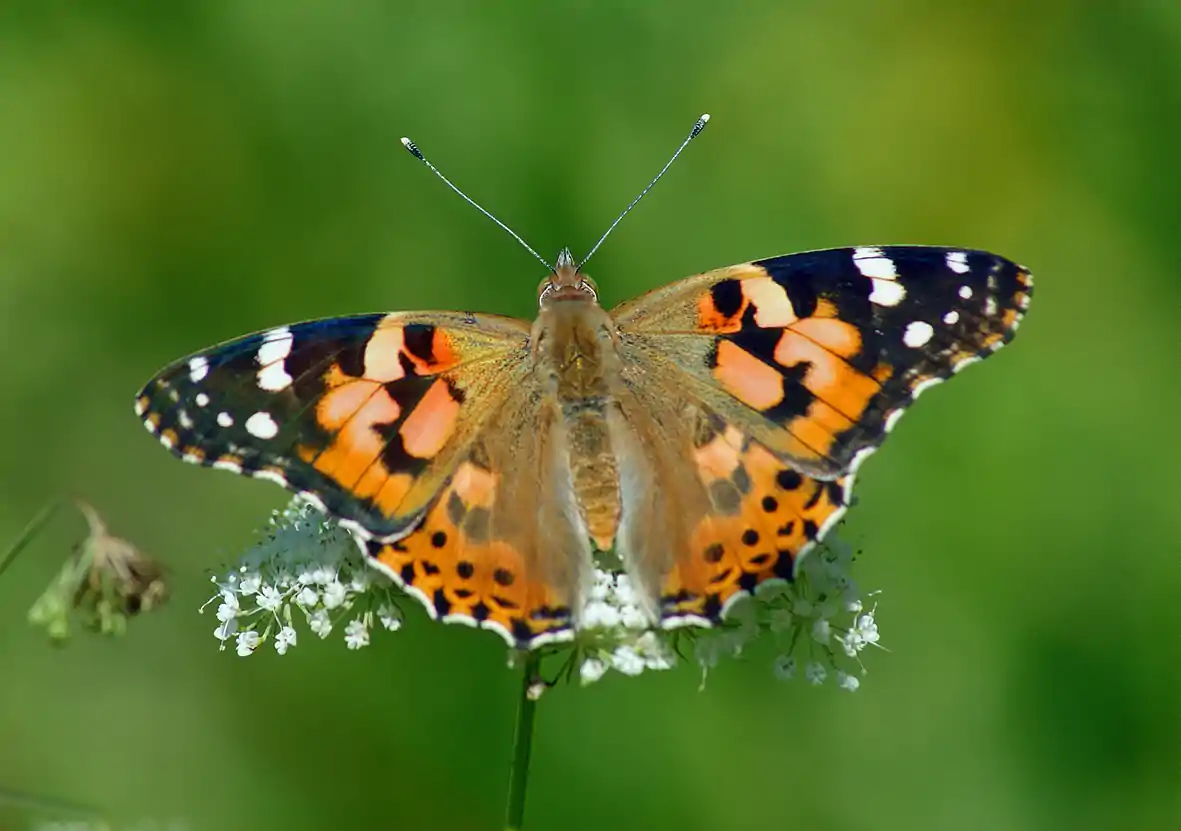
The Painted Lady is the ultimate frequent flyer. Its orange, black, and white pattern is familiar across much of the world, and in Oregon it can appear in anything from a quiet trickle to a full-blown ‘invasion year.’ When conditions line up, Painted Ladies can move north in big numbers and suddenly be everywhere—from schoolyards to roadside fields.
Caterpillars are best known for feeding on thistles, spinning loose silk nests as they grow. In the Willamette Valley, that often means thistles in sunny, open habitats like prairies, meadow edges, and disturbed ground.
Painted Ladies are migratory, so they don’t reliably overwinter in our colder months. Think of them as seasonal guests that reward good habitat with dramatic visits—especially where native late-season flowers are abundant.
Fun Facts
- Painted Ladies are among the most widely distributed butterflies on Earth.
- Their migrations can be multi-generation journeys—one ‘wave’ lays eggs, and the next generation continues the trip.