Back to Native Bees

Metallic sweat bees

Agapostemon spp.
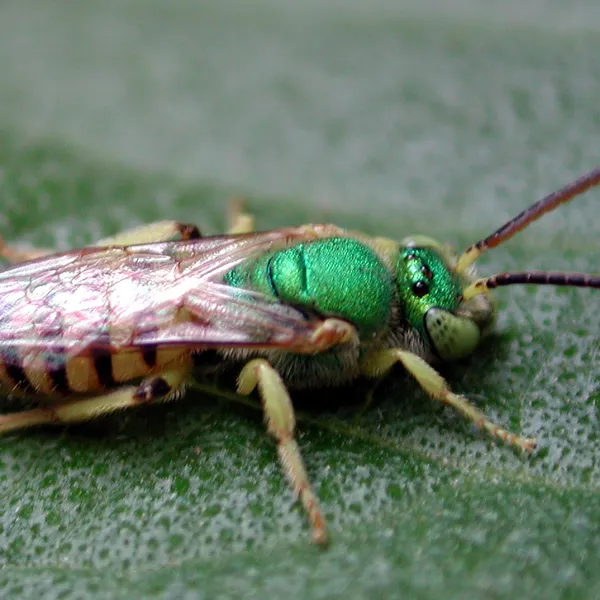
Metallic sweat bees

Nesting Preference

Predominantly solitary; nest in small ground tunnels.

Active Time of Year

Typically late spring through summer (varies).

Species in Genus (Oregon/Global)

5 species

Favorite Flowers

  • Daucus carota (wild carrot / Queen Anne's lace)
  • Achillea millefolium (yarrow)
  • Solidago canadensis (Canada goldenrod)

Agapostemon are the bees that look like someone accidentally polished them. Many species flash a brilliant metallic green, making them some of the easiest native bees to recognize at a glance.

They're generalist foragers and are common in a variety of habitats, including crop edges and gardens. Like many ground-nesting bees, they benefit from sunny, well-drained soil that isn't frequently tilled or compacted.

Solitary wasp

A solitary wasp has no colony of workers helping raise her young. A female may stock her own nest cells with food, or find a host for her developing offspring. Solitary describes social life; parasitoid describes a feeding strategy. A wasp can be both.

Social wasp

Social wasps share a nest and cooperate in raising young. In yellowjacket and paper wasp colonies, reproductive females lay eggs and workers help feed the brood and maintain the nest. They can defend that nest, so observing a forager is different from approaching a colony.

Non-native Social wasp

This is a social wasp introduced beyond its natural range. In this case the European paper wasp was introduced to North America from Europe, probably hidden in shipping materials. Non-native describes its origin, while social describes colony life.