
Digger bees (flower-bearer bees)
Anthophora spp.
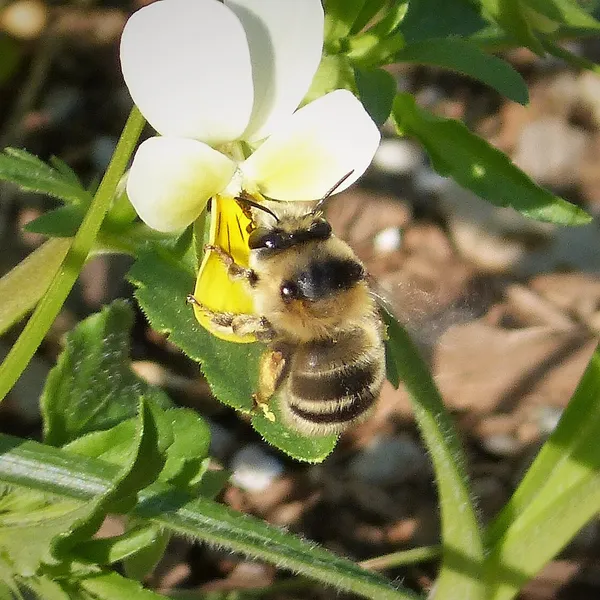
Nesting Preference
Solitary ground nesters; typically nest in soil (flat ground or banks); often form nesting aggregations.
Active Time of Year
Often spring through summer (species-dependent).
Species in Genus (Oregon/Global)
450 species
Favorite Flowers
- Penstemon spp. (penstemons)
- Salvia spp. (sages)
- Phacelia tanacetifolia (lacy phacelia)
Anthophora are fast, purposeful bees with the energy of a miniature hummingbird at flowers, especially on tubular blooms where their strong flight and quick handling shine. Many species are solitary, but you may see them nesting in loose neighborhoods where the soil is just right.
They typically dig nests in the ground, sometimes in banks or compacted faces, and provision their young in individual brood cells. If you notice a patch of soil with repeated bee traffic in spring, Anthophora (or their relatives) are often worth considering.