Back to Native Bees

Small carpenter bees

Ceratina spp.
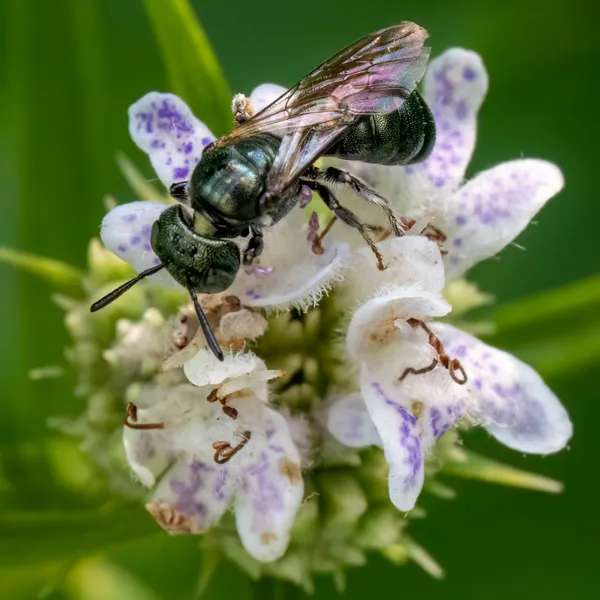
Small carpenter bees

Nesting Preference

Solitary stem nesters; commonly use pithy stems (often in plants like blackberry).

Active Time of Year

Emerge in spring and can stay active until fall.

Favorite Flowers

  • Rubus ursinus (trailing blackberry)
  • Achillea millefolium (yarrow)
  • Holodiscus discolor (oceanspray)

Ceratina are tiny, sleek bees that often look more like a small dark shimmer than a fuzzy pollinator. They're especially tied to stem habitat, using the soft pith inside dead or cut stems to create their nests.

Because of that, garden cleanup can accidentally evict them. Leaving some pithy stems standing through winter and into spring can provide nesting and overwintering habitat, turning a messy-looking corner into a high-value bee condo.

Solitary wasp

A solitary wasp has no colony of workers helping raise her young. A female may stock her own nest cells with food, or find a host for her developing offspring. Solitary describes social life; parasitoid describes a feeding strategy. A wasp can be both.

Social wasp

Social wasps share a nest and cooperate in raising young. In yellowjacket and paper wasp colonies, reproductive females lay eggs and workers help feed the brood and maintain the nest. They can defend that nest, so observing a forager is different from approaching a colony.

Non-native Social wasp

This is a social wasp introduced beyond its natural range. In this case the European paper wasp was introduced to North America from Europe, probably hidden in shipping materials. Non-native describes its origin, while social describes colony life.