
Yellow-faced bees (masked bees)
Hylaeus spp.
Nesting Preference
Solitary cavity nesters; typically use existing tunnels/holes in wood or stems; line cells with a cellophane-like secretion; carry pollen internally.
Active Time of Year
Spring through summer (varies widely by species).
Species in Genus (Oregon/Global)
500 species
Favorite Flowers
- Holodiscus discolor (oceanspray)
- Daucus carota (wild carrot / Queen Anne's lace)
- Achillea millefolium (yarrow)
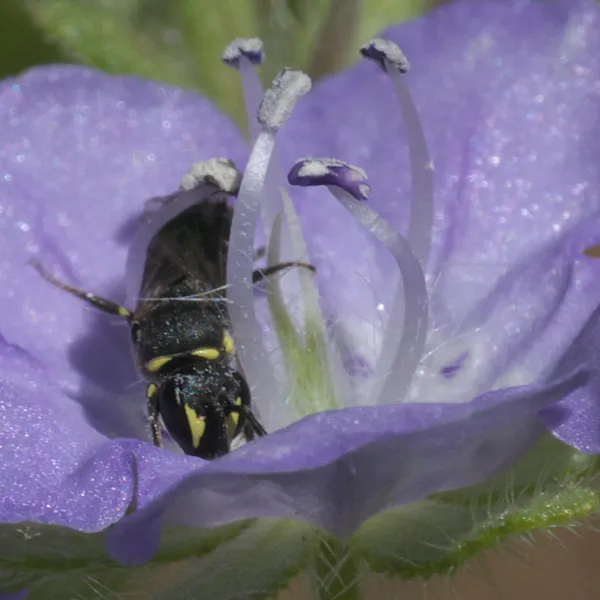
Hylaeus are the bees that borrowed a wasp's wardrobe: small, slender, and relatively hairless, often with yellow facial markings. One of their signature quirks is how they transport pollen, carrying it internally rather than in external pollen baskets or brushes.
They nest in existing cavities, including hollow stems and holes in wood, and they line brood cells with a waterproof, cellophane-like material. That combination of cavity nesting and subtle appearance means they can be common without being conspicuous, a quiet subplot running through summer flowers.