
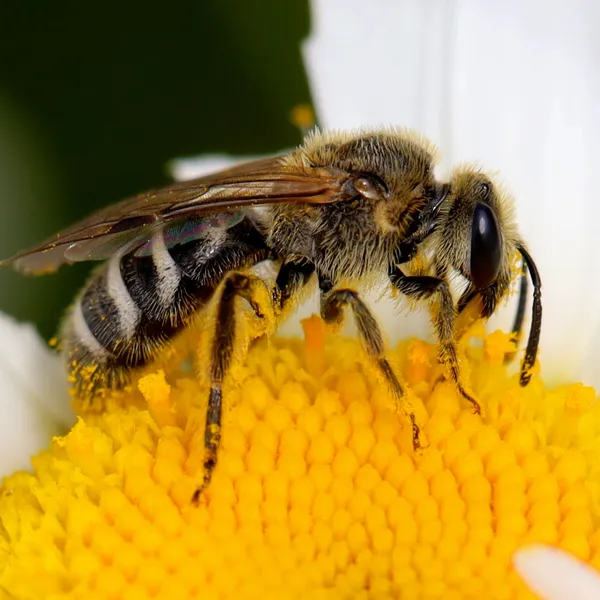
Sweat bees (common sweat bees)
Lasioglossum spp.
Nesting Preference
Predominantly solitary ground nesters; small tunnels in soil.
Active Time of Year
Often spring through fall (species-dependent).
Species in Genus (Oregon/Global)
15 species
Favorite Flowers
- Prunus avium (sweet cherry)
- Rubus spp. (caneberries)
- Limnanthes alba (meadowfoam)
- Trifolium spp. (clovers)
Lasioglossum are frequently the 'background bees' of the Willamette Valley: abundant, small, and steady, quietly stitching together pollination across a huge variety of plants. They can look deceptively plain, but their ecological contribution is anything but.
Most species nest in the ground, and because they're small, they can use nesting spots that would be useless to larger bees. If you've got patches of bare or lightly vegetated soil that stay relatively undisturbed, odds are good some Lasioglossum have considered it prime real estate.