
Leafcutter bees
Megachile spp.
Nesting Preference
Solitary cavity nesters; cracks/crevices, beetle holes, pithy stems; sometimes ground; line cells with cut leaves/petals.
Active Time of Year
Late spring through summer (varies).
Species in Genus (Oregon/Global)
40 species
Favorite Flowers
- Helianthus annuus (common sunflower)
- Medicago sativa (alfalfa)
- Allium cepa (onion)
- Cirsium spp. (thistles)
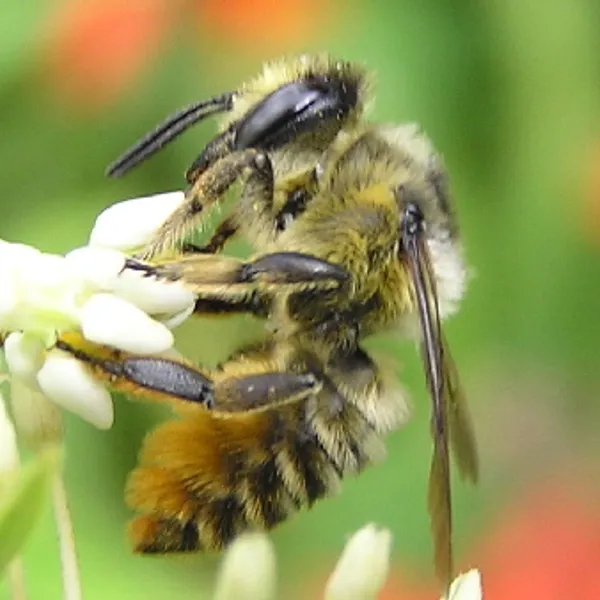
Megachile are the bees with scissors, if you're willing to accept a little botanical drama. Females cut neat circular or oval pieces from leaves or petals and use them like wallpaper and insulation for their brood cells.
They usually nest in existing cavities rather than digging their own, which makes them great candidates for bee-friendly yards with appropriate habitat: dead stems, drilled wood blocks (properly maintained), or natural cracks and crevices. In summer, a busy Megachile female can turn a flower patch into an assembly line.