Back to Native Bees

Long-horned bees

Melissodes spp.
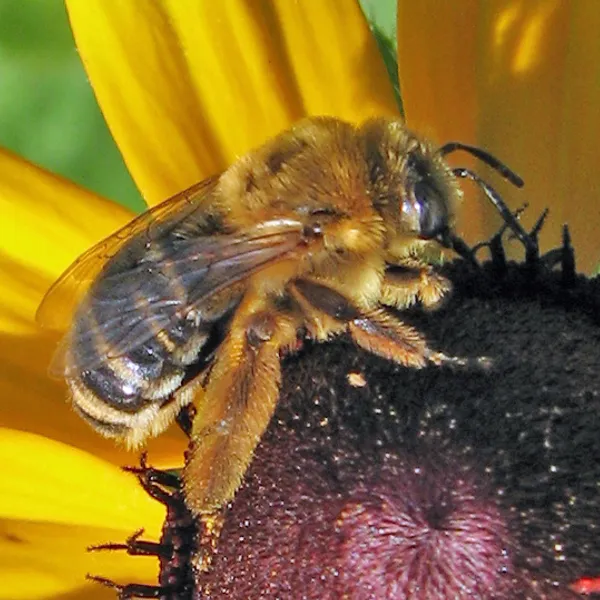
Long-horned bees

Nesting Preference

Solitary ground nesters; tunnels in soil.

Active Time of Year

Typically summer into early fall; often later-emerging.

Species in Genus (Oregon/Global)

25 species

Favorite Flowers

  • Helianthus annuus (common sunflower)
  • Symphyotrichum subspicatum (Douglas aster)
  • Erigeron spp. (fleabanes)

Melissodes are famous for the males' extra-long antennae, which give the group its long-horned nickname. In the Willamette Valley, they often become most noticeable later in the season, when sunflowers and aster-family blooms are in full swing.

They nest in the ground and can be strong, focused pollinators of composite flowers. If you've ever seen bees dozing in sunflower heads, you've brushed up against the charming habits common in this broader chap leg / long-horned neighborhood of bees.

Solitary wasp

A solitary wasp has no colony of workers helping raise her young. A female may stock her own nest cells with food, or find a host for her developing offspring. Solitary describes social life; parasitoid describes a feeding strategy. A wasp can be both.

Social wasp

Social wasps share a nest and cooperate in raising young. In yellowjacket and paper wasp colonies, reproductive females lay eggs and workers help feed the brood and maintain the nest. They can defend that nest, so observing a forager is different from approaching a colony.

Non-native Social wasp

This is a social wasp introduced beyond its natural range. In this case the European paper wasp was introduced to North America from Europe, probably hidden in shipping materials. Non-native describes its origin, while social describes colony life.