Back to Native Bees

Mason bees

Osmia spp.
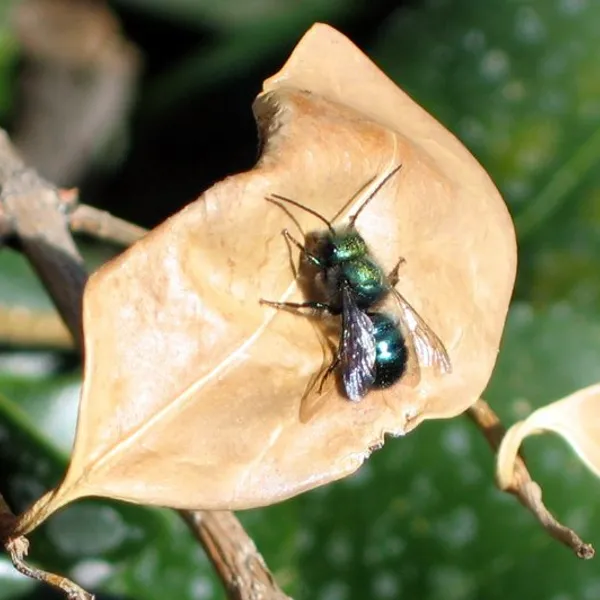
Mason bees

Nesting Preference

Solitary cavity nesters; use cracks/crevices, beetle holes, pithy stems; build cells with mud.

Active Time of Year

Spring into early summer (species-dependent).

Species in Genus (Oregon/Global)

70 species

Favorite Flowers

  • Malus domestica (apple)
  • Prunus avium (sweet cherry)
  • Rubus spp. (caneberries)
  • Vaccinium corymbosum (highbush blueberry)

Osmia are the iconic orchard helpers of spring. Many species are active right when fruit trees bloom, and they can be extraordinarily effective pollinators in cool conditions that keep other insects grounded.

They nest in existing cavities, partitioning a tunnel into a series of nursery rooms. The mason nickname comes from their habit of using mud to build and seal brood cells, a kind of miniature adobe craftsmanship tucked into stems, holes in wood, or rock crevices.

Solitary wasp

A solitary wasp has no colony of workers helping raise her young. A female may stock her own nest cells with food, or find a host for her developing offspring. Solitary describes social life; parasitoid describes a feeding strategy. A wasp can be both.

Social wasp

Social wasps share a nest and cooperate in raising young. In yellowjacket and paper wasp colonies, reproductive females lay eggs and workers help feed the brood and maintain the nest. They can defend that nest, so observing a forager is different from approaching a colony.

Non-native Social wasp

This is a social wasp introduced beyond its natural range. In this case the European paper wasp was introduced to North America from Europe, probably hidden in shipping materials. Non-native describes its origin, while social describes colony life.