
Aerial Yellowjacket
Dolichovespula arenaria
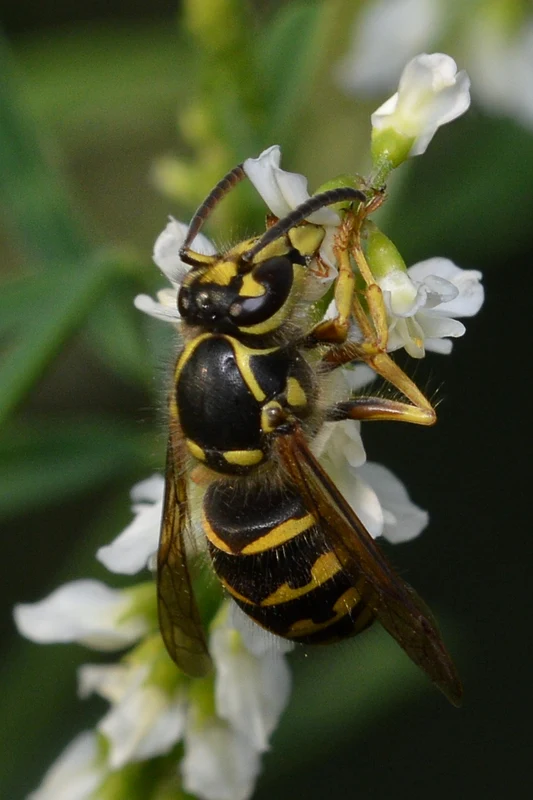
Builds enclosed paper nests above ground, often in trees. It is less likely to bother a picnic than scavenging ground nesters, but will vigorously defend a disturbed nest.
A nest above ground
Look for an enclosed paper nest among branches or on a sheltered structure. Its outer envelope hides the brood combs; this is different from the exposed cells of a paper wasp nest.
A different yellowjacket neighbor
Aerial yellowjackets hunt other insects and are less likely to gather around picnic food than western yellowjackets. That difference does not make an occupied nest safe to disturb.
A seasonal colony
A queen starts the colony, workers raise later broods, and new queens carry the population through winter. Avoid cutting or pruning around an active nest.
Advice for sharing space with wasps
Learn More
Read the university identification and biology guide
Explore WSU’s regional colony lifecycle (PDF, 2003)
Photograph & license
Aerial Yellowjacket — Ryan Hodnett. CC BY-SA 4.0. Resized and converted to WebP.
The photograph illustrates this species or group; it was not necessarily taken in Oregon.