
Bald-faced Hornet
Dolichovespula maculata
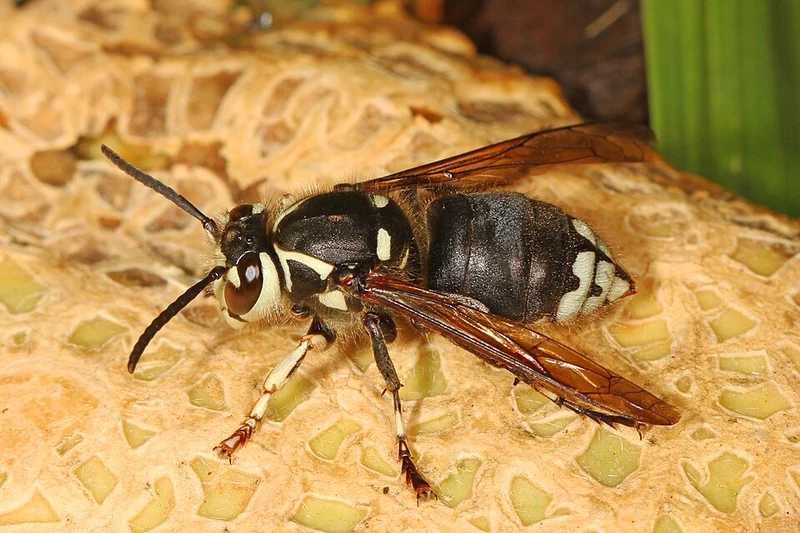
Look for black and ivory markings and a pale face. Despite its name, this is a kind of yellowjacket. Its enclosed paper nest is usually above ground. Observe from afar: nest defense can be intense.
A yellowjacket with a different name
The black body and pale face make this wasp distinctive. Despite its common name, it belongs to the yellowjacket group rather than the true hornet genus, Vespa.
Paper architecture
Workers build an enclosed paper nest above ground, often in a tree or shrub. They hunt insects to feed the larvae as the colony grows.
Watching safely
An occupied nest can be strongly defended. Enjoy distant views of its construction, but avoid shaking branches or working close to the entrance.
Advice for sharing space with wasps
Learn More
Read the university identification and biology guide
Explore WSU’s regional colony lifecycle (PDF, 2003)
Photograph & license
Bald-faced Hornet — Judy Gallagher. CC BY 2.0. Resized and converted to WebP.
The photograph illustrates this species or group; it was not necessarily taken in Oregon.