
European Paper Wasp
Polistes dominula
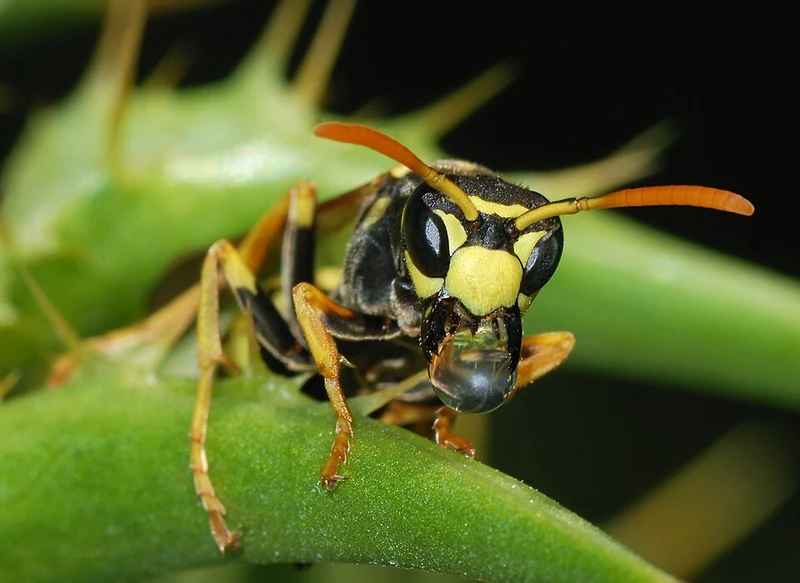
A frequent neighbor around buildings, with a slender waist, long legs, and orange antennae. Its open paper comb exposes the cells. It hunts caterpillars but can sting when the nest is disturbed.
Look at the nest, too
Long legs and orange antennae help distinguish this slender wasp from a yellowjacket. Its nest is an open comb: the individual cells are visible from below rather than hidden inside a paper envelope.
An introduced neighbor
This paper wasp is non-native in the Pacific Northwest. It still hunts insects, including caterpillars, to feed its growing larvae. Origin and ecological role are different parts of its story.
Colony life
Adults bring repeated meals to developing larvae in the shared nest. A nest near a doorway deserves particular attention because frequent close encounters can lead to defensive stings.
Advice for sharing space with wasps
Learn More
Read the university identification and biology guide
Explore WSU’s regional colony lifecycle (PDF, 2003)
Read OSU’s guide to wasp diversity and native status (PDF)
Photograph & license
European Paper Wasp — Alvesgaspar. CC BY-SA 3.0. Resized and converted to WebP.
The photograph illustrates this species or group; it was not necessarily taken in Oregon.