
Golden Paper Wasp
Polistes aurifer
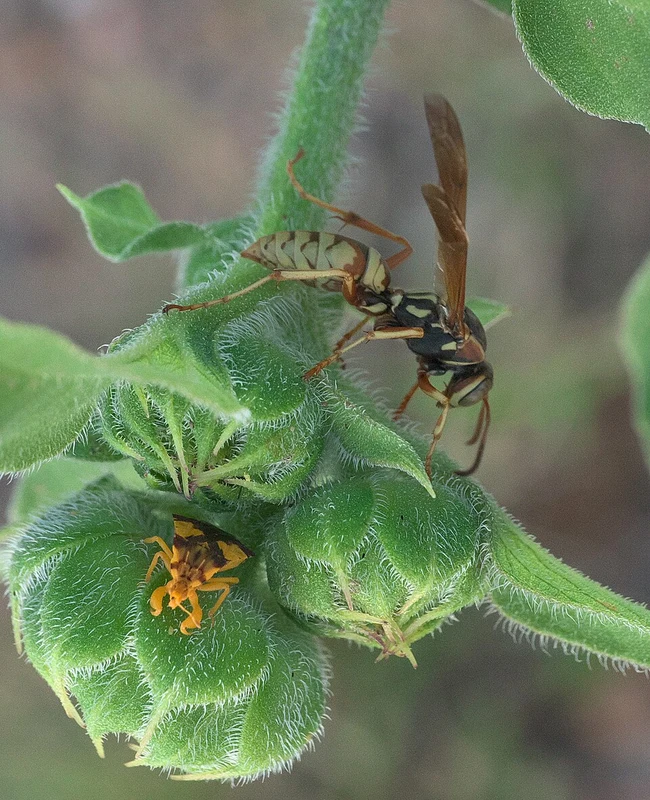
A native Pacific Northwest paper wasp, less frequently encountered than the introduced European species. It builds an open comb and gathers insects for its young. Brown and yellow coloring is a useful starting clue, not a complete identification.
A native paper wasp
Golden paper wasps are native to the Pacific Northwest. Brown and yellow coloring can help you begin an identification, but similar-looking wasps make color alone unreliable.
An open nursery
The exposed comb holds developing young. Adults return with insect food, especially caterpillars, and care for the brood together.
Sharing the garden
Watching a foraging wasp is different from approaching its colony. Give occupied nests space, especially when gardening or using a ladder near sheltered nest sites.
Advice for sharing space with wasps
Learn More
Read the university identification and biology guide
Explore WSU’s regional colony lifecycle (PDF, 2003)
Photograph & license
Golden Paper Wasp — xpda. CC BY-SA 4.0. Resized and converted to WebP.
The photograph illustrates this species or group; it was not necessarily taken in Oregon.