
Ichneumon Wasps
Ichneumonidae
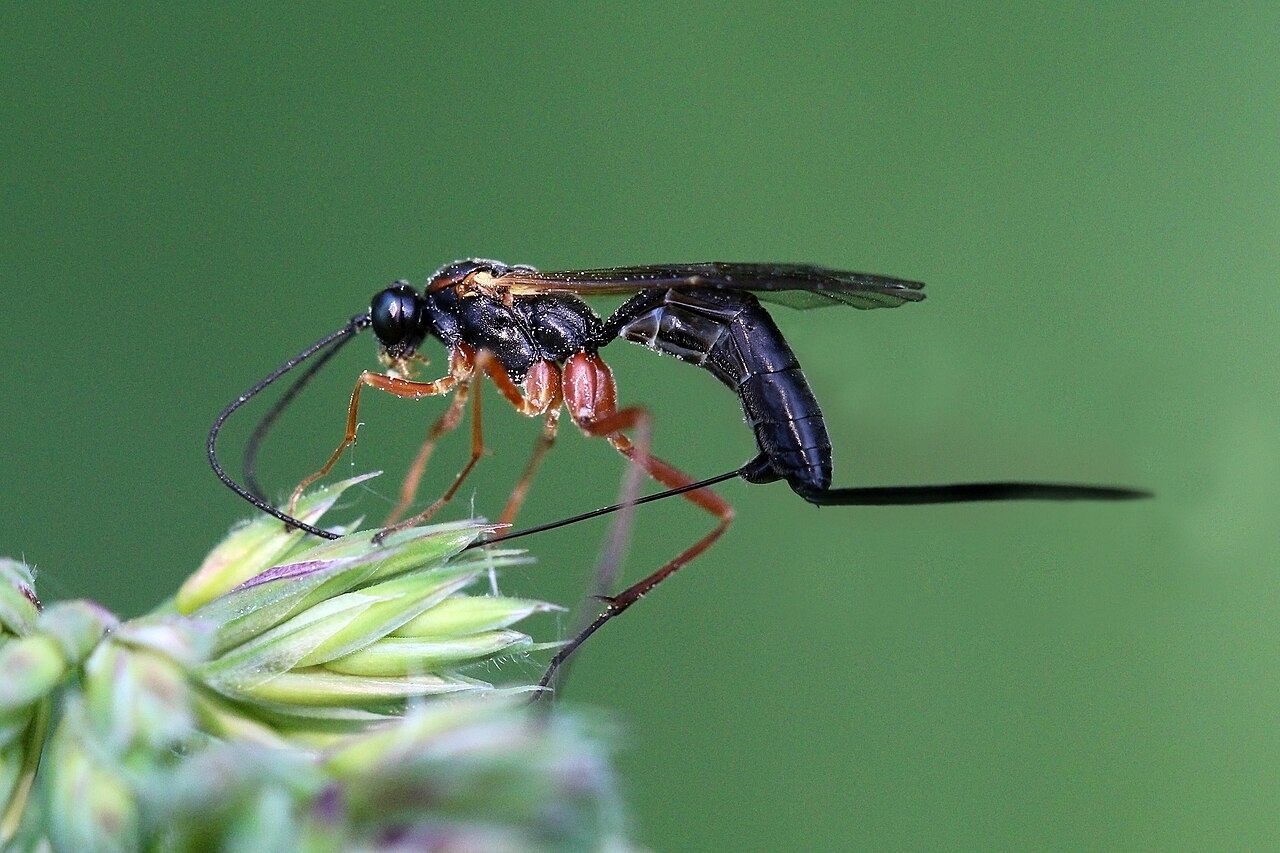
Often slender, with long antennae. Females use an egg-laying organ called an ovipositor to reach a host. Different species use different hosts. This photograph illustrates the wider ichneumon wasp family.
A large and varied family
Ichneumonidae includes many species, so this card describes a family rather than one Oregon species. Slender bodies and long antennae are common, but appearances vary widely.
What parasitoid means
The young develop by feeding on a host, eventually killing it. Different species use different hosts. A female uses her ovipositor, an egg-laying organ, to place eggs on, in, or near a suitable host.
Solitary describes social life
These wasps do not raise young in a queen-and-worker colony. Parasitoid describes their feeding strategy, so a wasp can be both solitary and a parasitoid.
Advice for sharing space with wasps
Learn More
Read the university identification and biology guide
Learn how parasitoid wasps develop
Photograph & license
Ichneumon wasp (Ichneumonidae sp) female by Charles J. Sharp, CC BY-SA 4.0. Resized; square crop for card display. Photographed in Oxfordshire, England.
The photograph illustrates this species or group; it was not necessarily taken in Oregon.