
Mason & Potter Wasps
Eumeninae
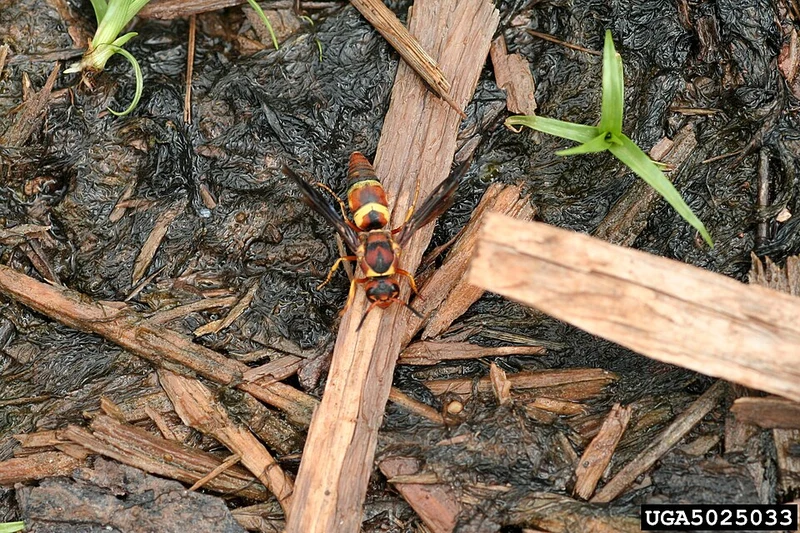
These caterpillar hunters use mud in their nests. Mason wasps often occupy existing cavities; potter wasps may build small mud pots. Each stocked cell shelters a developing young wasp. The photograph shows a mason wasp in the genus Euodynerus.
A group, not one species
Eumeninae is a subfamily containing many mason and potter wasps. The photograph is a representative mason wasp, not an identification guide to every member.
Two ways to build
Mason wasps generally reuse a cavity and divide it with mud. Potter wasps can build a complete little mud vessel. The young feed on stored prey, commonly caterpillars.
Independent mothers
Each female supplies her own brood cells rather than maintaining a worker colony. Nest shape and behavior can be useful clues alongside the wasp itself.
Advice for sharing space with wasps
Learn More
Read the university identification and biology guide
Photograph & license
Mason & Potter Wasps — Whitney Cranshaw, Colorado State University, Bugwood.org. CC BY 3.0 us. Resized and converted to WebP.
The photograph illustrates this species or group; it was not necessarily taken in Oregon.