
Western Yellowjacket
Vespula pensylvanica
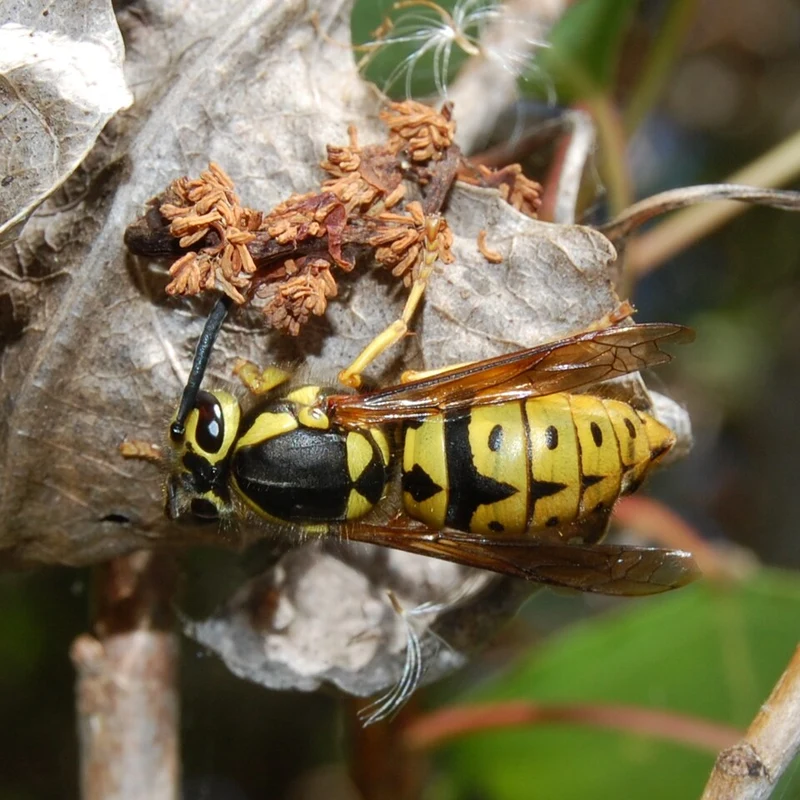
Stocky and boldly marked in yellow and black. Often nests in underground cavities and scavenges at outdoor meals. Workers also gather animal food for their larvae. Give nest entrances plenty of room.
Inside the nest
A queen begins the nest in spring. Her first workers take over foraging and help rear the next brood. The paper combs are hidden inside a protective envelope, often in an underground cavity.
Part of the food web
Workers gather animal protein for the larvae, both by hunting and by scavenging. This helps explain why this species is such a familiar visitor around outdoor meals.
Sharing space
Watch for repeated flights into a ground opening without approaching it. Keep food and rubbish covered, and give an active nest plenty of room.
Advice for sharing space with wasps
Learn More
Read the university identification and biology guide
Photograph & license
Western Yellowjacket — Eugene Zelenko. CC BY-SA 4.0. Resized and converted to WebP.
The photograph illustrates this species or group; it was not necessarily taken in Oregon.